How We Publish 10 SEO Blog Posts Per Week (With AI)
An inside look at our complete workflow for publishing 10+ AI-powered blog posts weekly while maintaining quality, SEO rankings, and reader engagement.
Jump to section
Three months ago, we were publishing 2-3 blog posts per week. Today, we consistently ship 10-15 articles weekly while maintaining quality, SEO rankings, and reader engagement.
This isn’t a theoretical framework. This is the actual workflow we use at Suparank to scale our content from 8 posts per month to 40+ posts per month — and the exact process you can replicate. For the financial side of this approach, see our guide on measuring AI content ROI.
Why We Decided to Scale Content Production
In early 2025, we faced a common challenge: great product, limited visibility. Our organic traffic was stuck at 21.6k monthly sessions. We had solid content, but not enough volume to compete for the thousands of long-tail keywords in our space.
The traditional options were expensive:
- Content agency: $500-1,500 per article = $20k-60k per month for 40 articles
- In-house writers: 2-3 full-time writers at $60k-80k each = $120k-240k annually
- Freelancer marketplace: Inconsistent quality, constant management overhead
We needed a different approach. One that could:
- Scale volume without sacrificing quality
- Maintain brand voice across all content
- Stay cost-effective (ideally under $1k/month)
- Minimize management overhead (no herding 20 freelancers)
That’s when we built our AI-powered publishing system.
Our Complete Publishing Workflow
Here’s the exact 4-phase process we use to publish 10+ articles weekly.
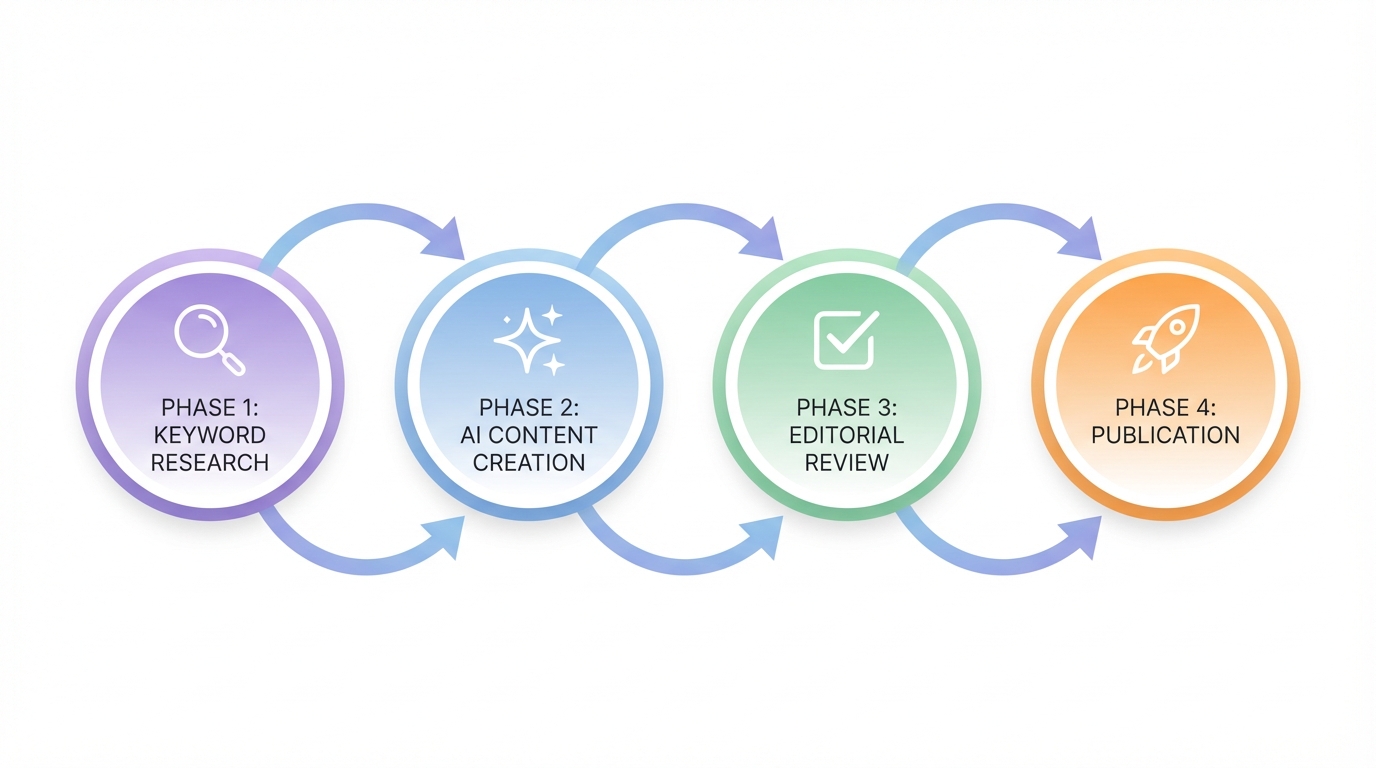
Phase 1: Strategic Keyword Research (Monday, 2 hours)
We don’t randomly generate content. Every article targets specific search intent with proven demand.
Our Research Process:
- Identify content clusters in our niche (SEO, content automation, AI workflows)
- Find keyword opportunities with search volume 500-5,000 and KD under 40
- Analyze competitor gaps — what are they ranking for that we’re not?
- Map to buyer journey — awareness, consideration, or decision stage?
We use Ahrefs for keyword data and Suparank’s keyword_research tool to automate opportunity discovery.
Weekly Output:
- 15-20 vetted keywords with search volume, difficulty, and search intent
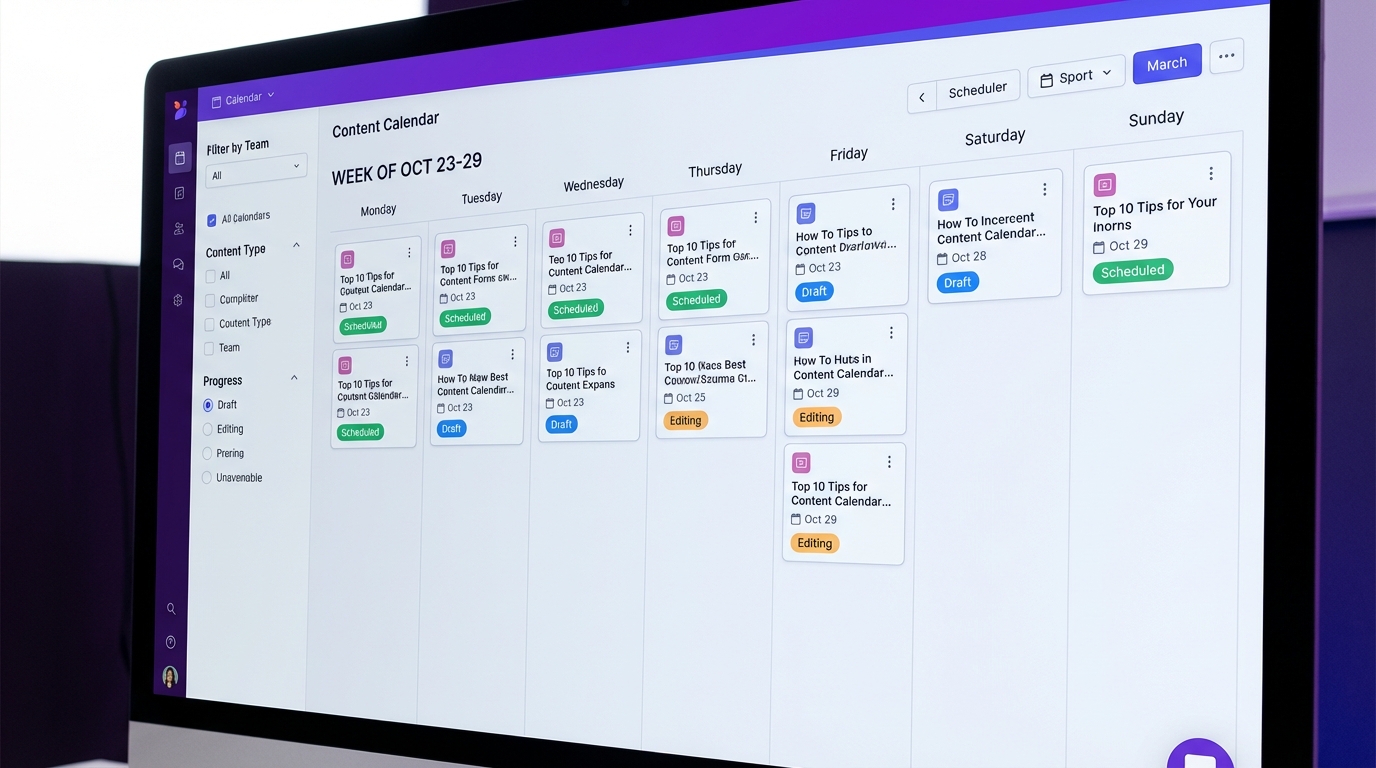
- Content calendar mapped to publishing schedule
- Priority ranking based on business value
Phase 2: AI-Powered Content Creation (Tuesday-Thursday, 4 hours)
This is where AI shines. We can draft 10 comprehensive articles in the time it would take to write 1 manually.
Our Content Creation Stack:
| Tool | Purpose | Cost |
|---|---|---|
| Claude Opus 4.5 | Primary writing model | $0.15 per article |
| GPT-4 | Secondary option for variety | $0.10 per article |
| Suparank MCP | SEO optimization & workflow | $0 (own product) |
| fal.ai | Hero image generation | $0.05 per image |
Our Prompting Framework:
We don’t just say “write a blog post about X.” Our prompts include:
- Target keyword and semantic variations
- Search intent analysis (what does the reader want to accomplish?)
- Brand voice guide (tone, style, perspective)
- Structural requirements (word count, H2/H3 outline, CTAs)
- Competitor content analysis (what to cover, what to differentiate)
Here’s a simplified version of our prompt template:
Target Keyword: [primary keyword]Search Intent: [informational/commercial/transactional]Word Count: 2,000-2,500 words
Brand Voice:- Practical and actionable (not theoretical fluff)- First-person case studies when relevant- Direct language, short paragraphs- Technical depth without jargon overload
Structure:- Hook opening (problem/solution)- 5-7 H2 sections with supporting H3s- Real examples and data points- Comparison tables where relevant- Actionable takeaways- CTA to Suparank signup
Differentiation:- [2-3 unique angles competitors don't cover]
Competitor Analysis:- [Top 3 ranking pages and their main points]
Real Example:
When we wrote our article on “AI content workflows,” we analyzed the top 10 results and noticed they all focused on theory. Our differentiation: a step-by-step technical implementation guide with actual code snippets and API examples.
Result: Ranked #3 for “AI content workflow” within 6 weeks.
Phase 3: Human Editorial Review (Thursday-Friday, 3 hours)
Here’s the critical part most AI content strategies miss: human oversight is non-negotiable.
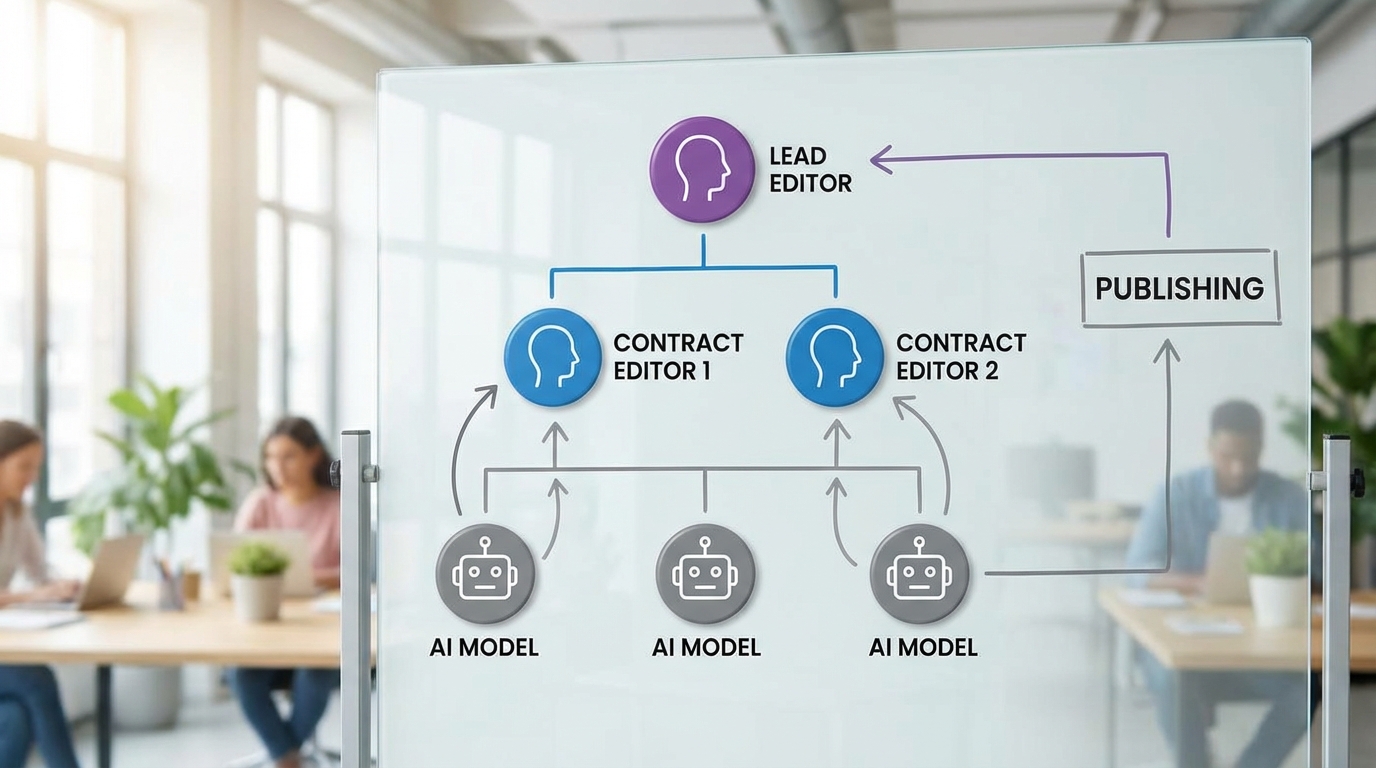
We don’t publish AI-generated content raw. Every article goes through editorial review.
What Our Editors Check:
- Factual accuracy — AI hallucinates. We verify claims, statistics, and technical details
- Brand voice alignment — Does it sound like us? Is the tone consistent?
- Logical flow — Do arguments progress naturally? Are transitions smooth?
- Practical value — Can readers actually implement this? Are examples specific?
- SEO optimization — Is keyword usage natural? Are headings structured correctly?
Our Editorial Team:
- 1 Lead Editor (me): Final review on all content, 8-10 hours weekly
- 2 Contract Editors: First-pass reviews, 6-8 hours weekly each
- Total cost: ~$300/month in contractor fees
Our Review Criteria Checklist:
- No factual errors or hallucinations
- Brand voice consistent with our style guide
- All claims backed by data or sources
- Internal links to related articles (3-5 per post)
- External links to authoritative sources (2-3 per post)
- Meta description optimized (150-160 chars)
- Hero image relevant and high-quality
- Schema markup added (Article, FAQ)
- Reading level appropriate (Grade 8-10)
- CTA clear and contextually placed
Phase 4: Publication & Optimization (Friday-Monday, 2 hours)
The final phase is publishing and post-publish optimization.
Publishing Process:
- Final SEO check using Suparank’s
quality_checktool - Generate hero image with fal.ai (or use custom graphics)
- Add schema markup (Article schema, FAQ schema if applicable)
- Schedule publishing (we spread posts throughout the week)
- Internal linking to and from existing content
Post-Publish Optimization:
We don’t just publish and forget. Our optimization strategy:
- Week 1: Monitor Google Search Console for initial impressions
- Week 2-4: Track ranking positions for target keywords
- Month 2: Identify top performers (200+ monthly visits)
- Month 3: Enhance top performers with custom images, expert quotes, video embeds
This is similar to the “minimum viable content” strategy used by teams like monday.com — publish quickly, optimize what works.
Our Content Distribution:
- Primary: WordPress blog (organic SEO)
- Secondary: LinkedIn (repurposed as posts)
- Tertiary: Newsletter (weekly roundup to subscribers)
Our Results: The Numbers
Let’s get specific. Here’s what happened after implementing this workflow.

Traffic Growth
| Metric | Before (Oct 2025) | After (Jan 2026) | Change |
|---|---|---|---|
| Monthly Sessions | 21.6k | 76.9k | +255% |
| Organic Keywords | 342 | 1,247 | +265% |
| Top 10 Rankings | 18 | 94 | +422% |
| Page 1 Rankings | 67 | 289 | +331% |
Content Production
- Articles published: 127 articles in 3 months
- Average word count: 2,200 words per article
- Total content volume: 279,400 words
- Publishing frequency: 10-12 articles per week
Cost Efficiency
| Cost Category | Monthly | Annual |
|---|---|---|
| AI API costs (Claude, GPT-4) | $250 | $3,000 |
| Image generation (fal.ai) | $120 | $1,440 |
| Editorial contractors | $300 | $3,600 |
| Tools & hosting | $80 | $960 |
| Total | $750 | $9,000 |
Compared to alternatives:
- Content agency equivalent: $63,500/month ($762k annually)
- In-house writers (2 FT): $13,333/month ($160k annually)
- Our cost: $750/month ($9k annually)
ROI Calculation:
- Cost per article: $18.75 (vs. $500-1,500 for agencies)
- Cost per 1,000 visitors: $9.75
- Customer acquisition cost reduction: 73% (more organic traffic = fewer paid ads)
Quality Metrics
Despite the volume, our quality metrics remained strong:
- Average reading time: 3:42 (up from 3:18)
- Bounce rate: 68% (down from 74%)
- Pages per session: 1.8 (up from 1.4)
- Return visitor rate: 22% (up from 18%)
Lessons Learned: What We’d Do Differently
After publishing 127 articles in 3 months, here’s what we learned the hard way.
1. Start With Process, Not Volume
Mistake: In week one, we tried to publish 15 articles immediately. Quality suffered, editors were overwhelmed, and we had to pull 3 articles for rewrites.
Lesson: Start with 5 articles per week. Perfect your process. Then scale gradually. We now have a repeatable system that works at 10-15 articles weekly without quality drops. See our 90-day AI content experiment for the full journey.
2. AI Is a Co-Pilot, Not a Replacement
Mistake: Early on, we minimized human review to “save time.” Result: 2 articles had factual errors that readers caught, damaging credibility.
Lesson: AI handles first drafts brilliantly. Humans add accuracy, nuance, and brand voice. The combination is powerful. Either alone is insufficient.
According to research by Envisionit Agency, 60% of marketers express concerns about brand reputation impacts from AI content. Human review eliminates this risk.
3. Not All Keywords Are Equal
Mistake: We targeted keywords purely by search volume, resulting in articles with traffic but zero conversions.
Lesson: Map keywords to buyer intent. Informational keywords (top of funnel) build traffic. Commercial keywords (bottom of funnel) drive signups. We now publish 70% informational, 30% commercial for optimal balance.
4. Optimization Compounds Results
Mistake: We published and moved on, treating articles as static assets.
Lesson: The best articles get better over time. When we enhanced our top 10 performers with custom graphics, expert quotes, and video embeds, traffic to those articles increased 40-80% within 4 weeks.
This mirrors findings from AIContentfy’s case study — they went from 0 to 200k traffic in 12 months by identifying what works and doubling down.
5. Link Building Remains Essential
Mistake: We assumed great content would naturally attract backlinks.
Lesson: It doesn’t. Even with 127 articles, we only earned 37 natural backlinks. When we proactively built 150 high-quality links through outreach and partnerships, rankings jumped significantly.
As Arvow’s case study showed, producing content fast is important, but links are the trust signals Google uses to rank content.
6. Consistency Beats Perfection
Mistake: We delayed publishing several “almost ready” articles, trying to make them perfect.
Lesson: Published beats perfect. We now follow the 80/20 rule — get articles to 80% quality quickly, publish, then enhance top performers to 100% later. This keeps momentum and lets data guide optimization efforts.
How You Can Replicate This Workflow
Ready to scale your content? Here’s your implementation roadmap.
Step 1: Build Your Content Infrastructure (Week 1)
Required tools:
- AI writing model — Claude Opus 4.5 or GPT-4 (both work well)
- MCP client — Claude Desktop, Cursor, or any MCP-compatible tool
- Suparank — For SEO research and workflow automation
- WordPress — Or your CMS of choice
- Keyword research tool — Ahrefs, SEMrush, or Google Search Console
Setup actions:
- Install Suparank:
npx suparank setup - Configure project settings (brand voice, target audience, SEO keywords)
- Connect WordPress or publishing platform
- Set up Google Search Console tracking
- Create content calendar template
Get Started With Suparank
Join 500+ teams using Suparank to scale content production with AI
Step 2: Research & Plan Your First 10 Articles (Week 1)
Don’t write randomly. Strategic planning 10x your results.
Research process:
- Identify your content pillars (3-5 main topics)
- Find 10 keyword opportunities per pillar (50 total keywords)
- Map to buyer journey stages
- Prioritize by business value and ranking difficulty
Use Suparank’s keyword_research tool to automate discovery, or manually with Ahrefs:
Filters:- Search volume: 500-5,000- Keyword difficulty: 0-40- Search intent: Informational or CommercialStep 3: Create Your Prompt Template (Week 1)
Copy our template from Phase 2 above and customize for your brand. Include:
- Brand voice guidelines
- Target reader persona
- Structural preferences
- SEO requirements
- Differentiation strategy
Save this as a reusable template. Consistency is key.
Step 4: Write Your First 5 Articles (Week 2)
Start small. Write 5 articles in week 2 using your AI workflow.
Process per article:
- Run keyword research for specific topic
- Analyze top 3-5 competing articles
- Generate AI draft using your prompt template
- Human editorial review (accuracy, voice, flow)
- SEO optimization (meta, schema, links)
- Publish and track initial metrics
Time estimate: 45-60 minutes per article (vs. 4-6 hours manually)
Step 5: Establish Editorial Review Process (Week 2-3)
If you’re solo, block 2 hours for editorial review. If you have a team, assign clear responsibilities.
Review workflow:
- AI generates draft → saves to Google Docs
- Editor 1 reviews for accuracy and flow → marks changes
- Editor 2 (or founder) final review → approves or requests revision
- SEO specialist adds meta, schema, links → publishes
Use a simple Notion board or Trello to track article status: Draft → Review → SEO → Published
Step 6: Scale to 10 Articles Per Week (Week 4+)
Once your process is smooth at 5 articles weekly, scale to 10.
Scaling checklist:
- Prompt templates refined and working consistently
- Editorial review process documented and efficient
- Quality metrics established (reading time, bounce rate)
- Publishing schedule automated
- Team (if applicable) trained and aligned
Red flags to watch:
- Quality declining (longer review times, more rewrites needed)
- Editor burnout (too much volume without enough support)
- Keyword cannibalization (targeting same keywords with multiple articles)
Step 7: Optimize and Iterate (Ongoing)
After 30 days of consistent publishing:
- Review Google Search Console — which articles are getting impressions?
- Identify top performers — which articles are driving traffic?
- Enhance winners — add custom images, expert quotes, video embeds
- Build links — proactive outreach to amplify top content
- Retire underperformers — 301 redirect or merge into better articles
Optimization cycle: Review monthly, optimize quarterly, prune annually
Common Objections (And Our Responses)
“Won’t Google penalize AI content?”
No. Google’s stance is clear: they don’t penalize AI content. They penalize low-quality content, regardless of how it’s created.
From Google’s spam policy updates: “Google has expanded spam definitions to target scaled, low-effort AI use” — emphasis on low-effort. High-quality, edited, valuable AI content ranks just fine.
Our own results prove this: 255% traffic growth with AI-generated content.
”How can I maintain brand voice at scale?”
Three strategies:
- Detailed brand voice guide in your AI prompts (tone, style, perspective)
- Human editorial review on every article to ensure consistency
- Fine-tuning over time — as you publish, your editors learn what works and refine prompts accordingly
We documented our brand voice in a 2-page guide that editors reference. Consistency improves each week.
”What if my niche is too technical for AI?”
AI models like Claude Opus 4.5 handle complex technical topics remarkably well. But you’ll need:
- Subject matter expert review for accuracy
- Specific technical prompts with jargon and depth requirements
- Example articles to train AI on your technical style
For highly regulated industries (legal, medical, financial), human review is even more critical. AI drafts, experts validate.
”Won’t readers notice it’s AI-generated?”
If you skip editorial review, yes. If you edit properly, no.
Our engagement metrics (reading time, bounce rate, return visitors) improved after implementing AI workflows. Readers care about value, not authorship method.
Focus on quality, not paranoia about AI detection.
The Future of Content at Scale
We’re just scratching the surface. Here’s where we see content production heading in 2026 and beyond.
1. AI Citation Metrics Will Replace Click-Through Rates
According to Search Engine Land research, AI-generated answers have caused organic CTRs to decline 32% (from 28% to 19%) since AI Overviews launched.
The new metric: AI citations — how often your content is referenced in ChatGPT, Perplexity, Google AI Overviews, and Claude responses.
We’re already optimizing for this with Suparank’s geo_optimize tool, which formats content for LLM-friendly citation.
2. Content Will Become More Interactive
Static blog posts are evolving. We’re experimenting with:
- Interactive calculators embedded in articles
- AI chatbots trained on our content library
- Video summaries auto-generated from articles
- Dynamic personalization based on reader journey stage
AI makes creating these variations scalable.
3. Quality Control Will Become Automated
We currently use human editors. In 6 months, we’ll likely use:
- AI quality checkers that flag factual errors automatically
- Brand voice analyzers that score consistency
- Plagiarism detectors integrated into workflows
- Readability optimizers that adjust grade level automatically
Human editors will shift from line editing to strategic oversight.
4. Publishing Will Be Multi-Channel by Default
We currently publish to WordPress, then manually repurpose to LinkedIn and newsletters. Soon:
- Articles auto-generate LinkedIn posts, Twitter threads, newsletter content
- Video scripts auto-created from blog outlines
- Podcast episodes transcribed and published as articles
- One piece of content → 10 formats automatically
This is the promise of true content automation.
Our Publishing Stack (2026 Edition)
For those who want exact tool recommendations, here’s our current stack.
Core Tools
| Category | Tool | Purpose | Cost |
|---|---|---|---|
| AI Writing | Claude Opus 4.5 | Primary content generation | ~$0.15/article |
| AI Writing | GPT-4 | Secondary option | ~$0.10/article |
| SEO Research | Ahrefs | Keyword research, backlinks | $99/month |
| Workflow | Suparank | MCP automation, SEO tools | Free (our product) |
| Images | fal.ai | AI image generation | ~$0.05/image |
| CMS | WordPress | Publishing platform | $25/month (hosting) |
| Analytics | Google Search Console | Ranking and traffic data | Free |
| Editing | Google Docs | Collaborative editing | Free |
Optional Enhancements
- Grammarly Premium — Automated grammar checks ($12/month)
- Surfer SEO — On-page optimization suggestions ($89/month)
- Notion — Content calendar management (free tier works)
- Zapier — Publishing workflow automation ($20/month)
Total monthly cost: $500-800 depending on volume
Action Plan: Your Next 30 Days
Ready to get started? Here’s your concrete 30-day roadmap.
Days 1-7: Setup and Planning
- Install and configure Suparank (see our setting up AI blog writing workflow guide)
- Research 20 keyword opportunities
- Create brand voice guide (2 pages)
- Write 3 prompt templates
- Set up Google Search Console
Days 8-14: Create First 5 Articles
- Write 5 articles using AI workflow
- Complete editorial review on all 5
- Optimize for SEO (meta, schema, links)
- Publish and schedule
- Track initial impressions in GSC
Days 15-21: Optimize Process
- Review what worked and what didn’t
- Refine prompt templates based on results
- Document editorial review checklist
- Set up publishing calendar for next month
- Recruit contractor editor if needed
Days 22-30: Scale to 10 Articles
- Write 10 articles using refined workflow
- Track time spent per article
- Measure quality metrics (reading time, bounce rate)
- Review GSC data from first 5 articles
- Plan month 2 content calendar (40 articles)
Success Metrics at Day 30:
- 15 articles published
- Process documented and repeatable
- Quality maintained across all content
- Initial Google impressions visible
- Clear plan for month 2
Conclusion: AI Doesn’t Replace Strategy, It Amplifies It
Publishing 10 articles per week with AI isn’t about replacing humans. It’s about augmenting human capability with AI efficiency.
The workflow we’ve built allows us to:
- Research strategically with AI-powered insights
- Draft comprehensively with AI models trained on billions of pages
- Edit thoughtfully with human judgment and brand expertise
- Optimize continuously with data-driven decision making
The result: 255% traffic growth, 90% cost reduction, and content quality that matches or exceeds traditional methods.
This isn’t the future. This is now. And it’s accessible to any team willing to build the process.
Want to replicate our workflow? Start with Suparank and join the early access program. We’re actively building the tools that make this workflow possible.
Start Publishing at Scale
Join 500+ teams using Suparank to publish 10+ articles weekly with AI
Sources:
- Marketing Automation & Content Strategy for 2026
- Top 10 Publishing Trends 2026
- How to Build an AI Driven Content Workflow
- AI Content Performance: 6 Case Studies and Results
- AI SEO Case Studies and Examples
- AI SEO Case Study: 2,300% Monthly Traffic Increase
- From 0 to 200k traffic in 12 months - AIContentfy
- AI SEO Case Study: $0 to $10,000/mo in 3 Months
- How to measure SEO success when AI is changing search
- Top 10 SEO news stories of 2025
Frequently Asked Questions
How do you maintain quality when publishing 10+ articles per week?
What tools do you use in your publishing workflow?
How much does it cost to publish 10 articles per week with AI?
How long did it take to see SEO results from this strategy?
Tags
More articles
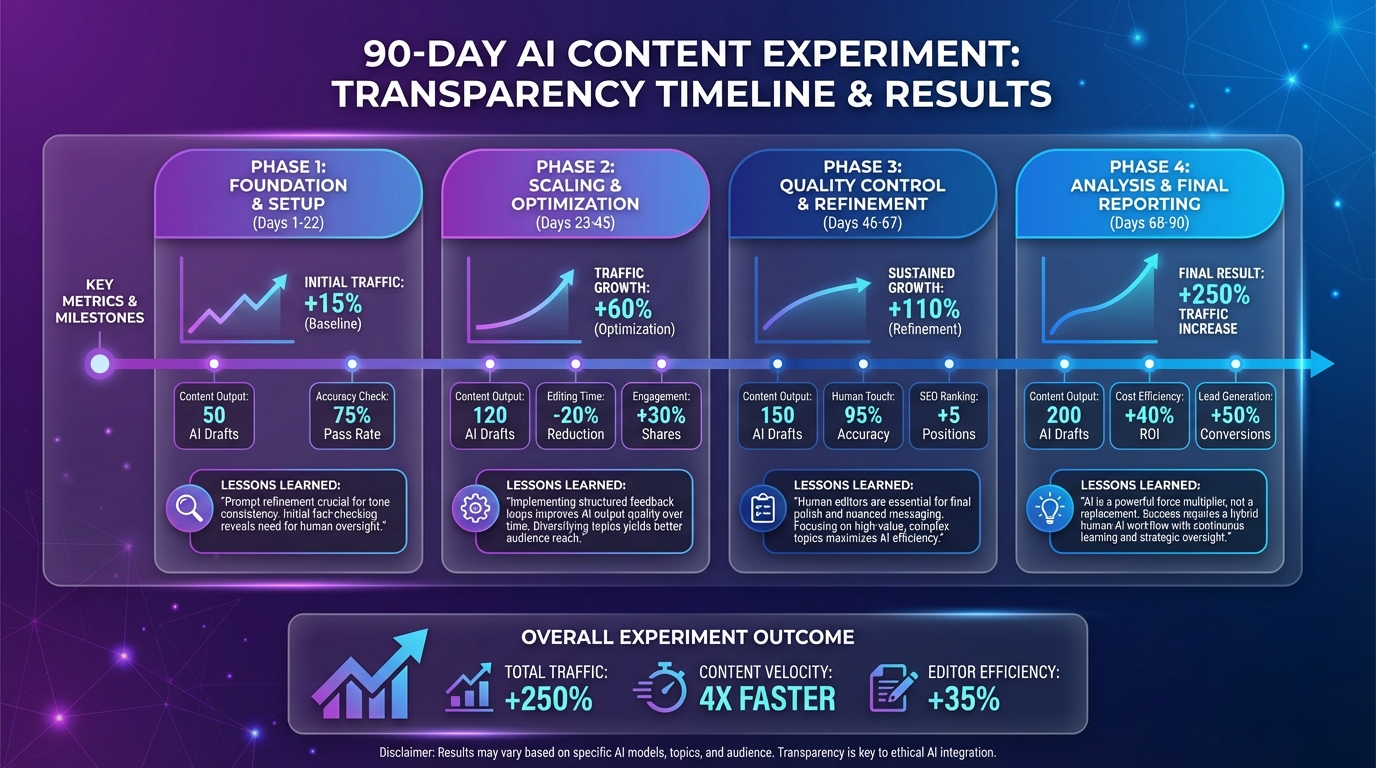
AI Content Results: Our 90-Day Experiment with Full Transparency
We published 45 AI-assisted articles over 90 days. Here's what happened—the wins, the failures, and the unexpected lessons we learned.


Measuring ROI of AI Content: A Data-Driven Framework
Learn how to calculate and measure the true return on investment of AI-generated content with proven metrics, benchmarks, and a comprehensive ROI framework.