How to Optimize Content for ChatGPT: Get Cited in AI Search
Master the art of getting your content cited by ChatGPT. Learn proven optimization tactics, structured data strategies, and formatting techniques that work.
Jump to section
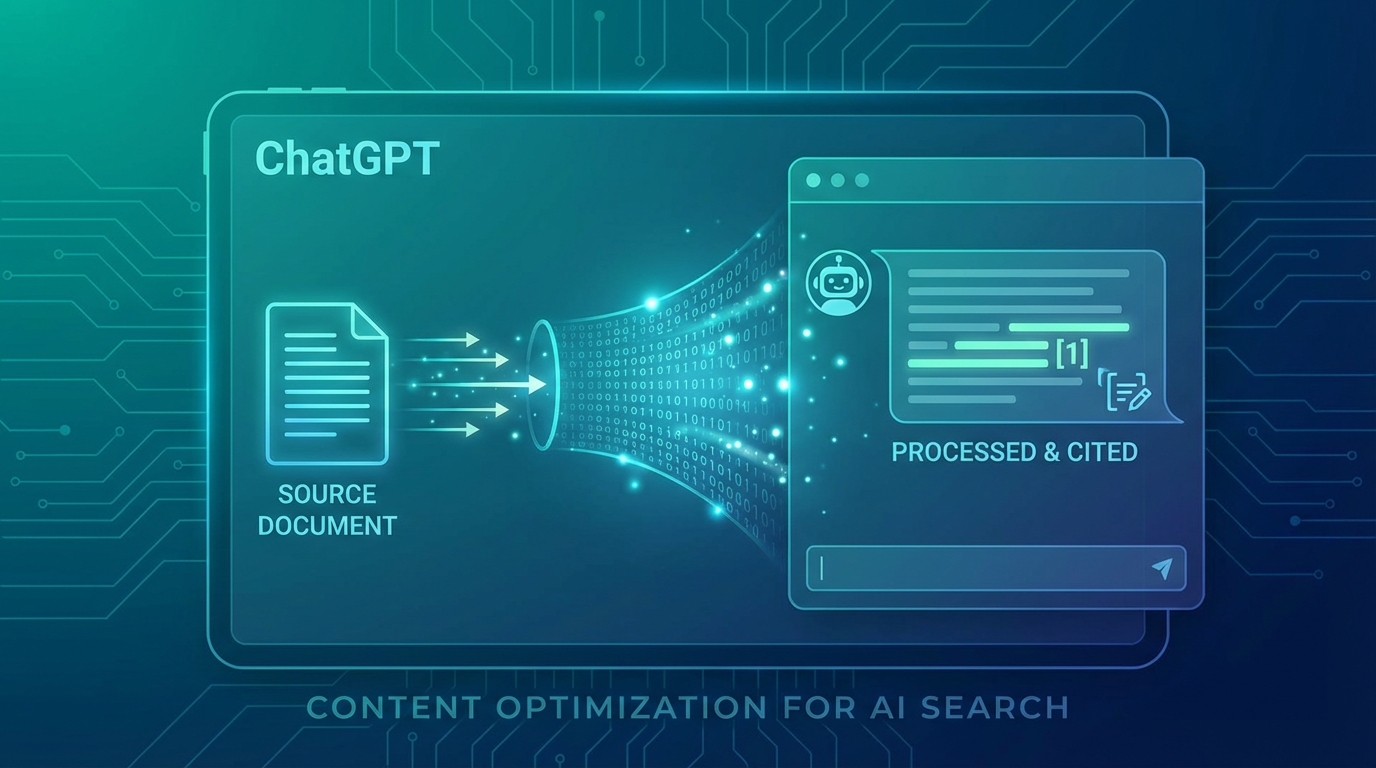
Getting cited by ChatGPT isn’t about gaming an algorithm—it’s about understanding how AI search engines select, trust, and reference content. When ChatGPT cites your article, you’re not just getting a backlink; you’re being validated as an authoritative source to millions of users. This practice falls under what’s known as Generative Engine Optimization—and understanding the differences between GEO and traditional SEO is essential for modern content strategy.
The problem? Most content isn’t optimized for AI visibility. Traditional SEO focused on keywords and backlinks. ChatGPT looks at semantic relevance, page speed, and structured data. If your content takes 2 seconds to load or lacks clear structure, you’re invisible to AI search—even if you rank #1 on Google.
This guide reveals exactly how ChatGPT selects sources, what technical optimizations matter most, and proven tactics to get your content cited. No guesswork. Just data-backed strategies from analyzing thousands of ChatGPT citations.
How ChatGPT Browse Actually Works
ChatGPT doesn’t browse the web like you do. It uses Retrieval-Augmented Generation (RAG), a two-phase process that fundamentally changes how content gets discovered and cited.
The Two-Phase Selection Process
Phase 1: Document Retrieval When you ask ChatGPT a question with browsing enabled, it first searches for relevant documents using semantic similarity—not keyword matching. The model looks for content that conceptually matches your query, analyzing context and meaning rather than exact phrase matches.
Phase 2: Content Extraction and Citation Once documents are retrieved, ChatGPT scans them for specific answers. Only content that enters the context window can be cited. This is where structure matters—the model needs to quickly identify relevant sections, extract information, and attribute it correctly.
What Gets Cited: The Data
Recent studies analyzing thousands of ChatGPT citations reveal surprising patterns:
- Wikipedia: 43% of all citations—the undisputed king of AI sources
- Reddit: 12% of citations—community discussions rank surprisingly high
- YouTube: 29.5% citation rate in Google AI Overviews, 200x advantage over other video platforms
- Lower-ranked Google pages: Still cited if well-structured, even below position 10
The takeaway? Authority matters (hence Wikipedia’s dominance), but structure and technical performance can overcome lower traditional search rankings.
The Context Window Challenge
Here’s the uncomfortable truth: 24% of ChatGPT (4o) responses are generated without explicitly fetching any online content. Even more striking, Gemini provides no clickable citation in 92% of answers.
Why? The model can only cite sources that make it into the context window. If your content is:
- Too slow to load during the retrieval phase
- Poorly structured so key information is buried
- Missing semantic signals that indicate relevance
…it won’t even be considered, regardless of how well it ranks on Google.
Content Structure That Gets You Cited
ChatGPT isn’t scanning your content like a human reader. It’s parsing structure, looking for semantic signals, and extracting information based on clear hierarchies. Here’s how to format content for maximum AI visibility.
1. Hierarchical Heading Structure
Use H2 and H3 tags properly—not for design, but for semantic meaning. ChatGPT relies on heading hierarchies to understand content organization and quickly locate relevant sections.
Before (Poor Structure):
<p><strong>What is Semantic SEO?</strong></p><p>Semantic SEO focuses on topic relevance...</p>After (AI-Optimized):
<h2>What is Semantic SEO?</h2><p>Semantic SEO focuses on topic relevance...</p>The semantic HTML signals to AI crawlers that this is a key section heading, not just bold text. This distinction matters enormously during the content extraction phase.
2. Question-and-Answer Formatting
FAQ sections aren’t just user-friendly—they’re AI-friendly. ChatGPT is trained on conversational data, so content formatted as Q&A naturally aligns with how the model processes information.
3. Bite-Sized, Scannable Facts
Break complex information into digestible chunks. Use:
- Short paragraphs (2-3 sentences max)
- Bulleted lists for multi-point information
- Definition lists for glossary-style content
- Numbered steps for processes
ChatGPT’s extraction algorithms prioritize content that can be quickly parsed and attributed. Dense paragraphs get skipped; structured facts get cited.
4. Semantic HTML Elements
Use proper HTML tags that convey meaning:
| Element | Purpose | AI Benefit |
|---|---|---|
<article> | Main content wrapper | Signals primary content to crawlers |
<section> | Thematic grouping | Helps AI understand content segments |
<header> | Introductory content | Identifies page purpose quickly |
<aside> | Supplementary info | Distinguishes main vs. supporting content |
<time> | Dates and timestamps | Signals content freshness |
These semantic elements help AI understand your content structure without relying solely on visual layout or CSS classes.
Technical Optimization: The Make-or-Break Factors
Structure is necessary but not sufficient. Technical performance determines whether your content even gets considered during the retrieval phase.
1. Page Speed: The 0.4-Second Rule
The single most important technical factor: First Contentful Paint under 0.4 seconds.
Pages meeting this threshold are 3x more likely to be cited. Why? AI retrieval systems have millisecond-level timeouts. If your page doesn’t start rendering instantly, the crawler moves on to faster alternatives.
How to achieve sub-0.4s FCP:
- Minimize JavaScript hydration delays
- Use static site generation (SSG) or edge rendering
- Implement resource hints (
preconnect,dns-prefetch) - Optimize server response time (TTFB under 200ms)
- Eliminate render-blocking resources
2. Structured Data: Your Citation Advantage
Structured data using Schema.org vocabulary is how you explicitly tell AI systems what your content means, not just what it says.
Priority Schema Types for ChatGPT Citations:
FAQPage Schema (Highest Impact)
{ "@context": "https://schema.org", "@type": "FAQPage", "mainEntity": [{ "@type": "Question", "name": "How does ChatGPT select sources?", "acceptedAnswer": { "@type": "Answer", "text": "ChatGPT uses Retrieval-Augmented Generation..." } }]}FAQ schema has one of the highest citation rates in AI-generated answers. Content using FAQPage schema appears in ChatGPT, Perplexity, and Google AI Overviews significantly more than unstructured content.
Article Schema
{ "@context": "https://schema.org", "@type": "Article", "headline": "How to Optimize Content for ChatGPT", "author": { "@type": "Person", "name": "Your Name" }, "datePublished": "2026-01-14", "dateModified": "2026-01-14"}Article schema helps AI systems identify authoritative content, extract publication dates for freshness signals, and properly attribute citations to authors.
HowTo Schema (For Tutorial Content)
{ "@context": "https://schema.org", "@type": "HowTo", "name": "How to Add Schema Markup", "step": [{ "@type": "HowToStep", "text": "Identify your content type...", "name": "Step 1: Identify Content Type" }]}Tutorial and how-to content with proper HowTo schema gets cited heavily, especially for process-based queries.
3. Robots.txt Configuration: Critical for Visibility
You must explicitly allow OAI-SearchBot or your content will never be cited by ChatGPT, regardless of optimization.
Check your robots.txt for these crawlers:
# Allow OpenAI (ChatGPT)User-agent: OAI-SearchBotAllow: /
# Allow for general ChatGPT training (separate)User-agent: GPTBotAllow: /
# Allow common AI crawlersUser-agent: CCBotAllow: /
User-agent: anthropic-aiAllow: /4. Crawl Efficiency and Site Architecture
AI crawlers don’t have unlimited budgets. Make it easy to find your best content:
- XML sitemaps with priority signals for key content
- Internal linking from high-authority pages to content you want cited
- Minimal crawl depth (important pages accessible within 3 clicks from homepage)
- Clean URL structure (avoid session IDs, excessive parameters)
8 Proven Tactics to Get Cited by ChatGPT
Now that we understand how ChatGPT selects content, here are actionable tactics that increase citation likelihood.
Tactic 1: Optimize for Bing First
ChatGPT Search uses Bing’s index as its primary source. If you’re not indexed in Bing, you won’t appear in ChatGPT results—even if you rank #1 on Google.
Action items:
- Submit your sitemap to Bing Webmaster Tools
- Verify Bingbot can access your content (check server logs)
- Use Bing’s URL inspection tool to confirm indexing
- Monitor Bing rankings for your target keywords
Tactic 2: Add Comprehensive FAQ Sections
FAQ sections with proper FAQPage schema consistently outperform other content types for AI citations. This aligns with key AI search ranking factors that prioritize structured, extractable content.
Best practices:
- Minimum 4-6 questions per FAQ section
- Start answers with direct, concise statements
- Use natural language (how users actually ask questions)
- Include questions that target long-tail variations
Tactic 3: Build a YouTube Presence
YouTube shows the strongest correlation with AI visibility (0.737) across all platforms. YouTube gets cited 200x more than any other video platform.
Why YouTube dominates AI citations:
- Video transcripts provide rich, structured text content
- YouTube’s authority and trustworthiness are baked into AI models
- Tutorial and how-to content naturally fits Q&A format
- Video descriptions and chapters create semantic structure
Content types with highest YouTube citation rates:
- Product tutorials and demos
- How-to guides and step-by-step processes
- Product reviews and comparisons
- Pricing and feature explanations
Tactic 4: Update Content Regularly with Fresh Data
LLMs increasingly prefer up-to-date sources. Refreshing old posts with new data and recent examples signals relevance.
Update strategy:
- Add 2026 statistics and current examples
- Update dateModified in Article schema
- Add new sections addressing recent developments
- Include “Last updated” timestamps in content
ChatGPT can access this timestamp information through structured data and visual scanning, using it as a freshness signal during source selection.
Tactic 5: Use Definition Lists and Glossary-Style Content
AI models excel at extracting definitions and specific fact statements. Format key concepts as definition lists:
<dl>  <dt>Retrieval-Augmented Generation (RAG)</dt>  <dd>A two-phase process where AI first retrieves relevant      documents, then generates responses using that content.</dd>
  <dt>Context Window</dt>  <dd>The limited amount of text an AI model can process      at one time, typically measured in tokens.</dd></dl>
This format is easily extracted and attributed during the citation phase.
Tactic 6: Implement Author Authority Signals
ChatGPT considers source authority when selecting citations. Strengthen author credibility through:
- Author schema markup with credentials and expertise
- Author bio pages with detailed background
- Social proof signals (LinkedIn, Twitter verification)
- Published works and credentials in author schema
Tactic 7: Optimize for Semantic Relevance, Not Keywords
ChatGPT’s retrieval phase uses semantic similarity, not keyword matching. This means:
- Use natural language and conversational phrasing
- Include related concepts (semantic variations)
- Answer the user’s intent directly and clearly
- Avoid keyword stuffing (actually hurts AI visibility)
Write for comprehension and topical relevance, not keyword density targets.
Tactic 8: Create Clear, Extractable Summaries
Place concise summaries at the beginning of articles and major sections. ChatGPT often extracts these for quick answers.
Effective summary format:
<section> <h2>Key Takeaway: How ChatGPT Selects Sources</h2> <p><strong>In brief:</strong> ChatGPT uses Retrieval-Augmented Generation (RAG) to find semantically relevant content, prioritizing fast-loading pages with clear structure and proper schema markup.</p></section>These summaries serve double duty: helping human readers and providing AI-friendly extraction points.
Before and After: Real Optimization Examples
Let’s examine how these principles transform actual content for ChatGPT visibility.
Example 1: Blog Post Structure
Before (Not Optimized):
<div class="post-content"> <p><strong>What You Need to Know About AI Search</strong></p> <p>AI search is changing everything. Unlike traditional search engines that rely on keywords, AI models like ChatGPT use semantic understanding to find relevant content. This means optimizing for AI requires different strategies than traditional SEO. You need to focus on structure, speed, and schema markup.</p></div>After (AI-Optimized):
<article>  <header>    <h1>How to Optimize Content for AI Search</h1>    <time datetime="2026-01-14">January 14, 2026</time>  </header>
  <section>    <h2>What is AI Search Optimization?</h2>    <p>AI search optimization (also called Generative Engine Optimization    or GEO) is the practice of structuring content so AI models like    ChatGPT can easily discover, extract, and cite it.</p>
    <h3>Key Differences from Traditional SEO</h3>    <ul>      <li><strong>Semantic relevance</strong> over keyword density</li>      <li><strong>Page speed</strong> (sub-0.4s FCP) is critical</li>      <li><strong>Schema markup</strong> enables proper extraction</li>    </ul>  </section></article>
<script type="application/ld+json">{  "@context": "https://schema.org",  "@type": "Article",  "headline": "How to Optimize Content for AI Search",  "datePublished": "2026-01-14"}</script>
What changed:
- Semantic HTML (
<article>,<header>,<section>) - Proper heading hierarchy (H1 → H2 → H3)
- Structured list format for key points
- Article schema markup for attribution
- ISO date format in
<time>element
Example 2: FAQ Section
Before (Not Optimized):
<div class="faqs"> <p><b>Q: Does ChatGPT use backlinks?</b><br> A: Not really. ChatGPT doesn't look at backlinks the way Google does. It's more about semantic relevance and page structure.</p></div>After (AI-Optimized):
<section itemscope itemtype="https://schema.org/FAQPage">  <h2>Frequently Asked Questions</h2>
  <div itemscope itemprop="mainEntity"       itemtype="https://schema.org/Question">    <h3 itemprop="name">Does ChatGPT use backlinks for ranking?</h3>    <div itemscope itemprop="acceptedAnswer"         itemtype="https://schema.org/Answer">      <p itemprop="text"><strong>No.</strong> ChatGPT doesn't consider      backlinks when selecting sources. Unlike Google's algorithm,      ChatGPT prioritizes semantic relevance, page speed (under 0.4s FCP),      and structured data over traditional SEO signals like backlinks      or domain authority.</p>    </div>  </div></section>
<script type="application/ld+json">{  "@context": "https://schema.org",  "@type": "FAQPage",  "mainEntity": [{    "@type": "Question",    "name": "Does ChatGPT use backlinks for ranking?",    "acceptedAnswer": {      "@type": "Answer",      "text": "No. ChatGPT doesn't consider backlinks when selecting sources..."    }  }]}</script>
What changed:
- FAQPage schema (microdata and JSON-LD)
- H3 heading for question (semantic structure)
- Direct answer first (“No.”) followed by explanation
- Clear, extractable format for AI crawlers
Common Mistakes That Kill Your Citation Chances
Even well-intentioned optimization can backfire. Avoid these critical errors:
Mistake 1: Blocking AI Crawlers Accidentally
Many security plugins, CDN configurations, and robots.txt files block OAI-SearchBot by default. Always verify:
# Check if your site allows OAI-SearchBotcurl -A "Mozilla/5.0 AppleWebKit/537.36 (KHTML, like Gecko; compatible; OAI-SearchBot/1.0; +https://openai.com/searchbot)" https://yoursite.comIf you get blocked or rate-limited, fix your robots.txt immediately.
Mistake 2: Over-Optimizing with Keyword Density
Traditional SEO tactics like keyword stuffing actively hurt AI visibility. ChatGPT’s semantic understanding flags unnatural repetition as low-quality content.
Instead: Write naturally, use synonyms and related concepts, and focus on comprehensive topic coverage.
Mistake 3: Ignoring Mobile-First Design
ChatGPT crawls increasingly favor mobile-optimized content. Responsive design isn’t optional:
- Test with Google’s Mobile-Friendly Test
- Ensure readable font sizes (16px minimum)
- Use touch-friendly button/link sizes (44px minimum)
- Avoid horizontal scrolling and fixed-width elements
Mistake 4: Burying Key Information Below the Fold
ChatGPT extracts information from the first screenful of content disproportionately. Place:
- Key definitions and concepts early
- Direct answers to questions in opening paragraphs
- Summary boxes or TLDR sections at the top
Don’t save your best content for the bottom of 3,000-word articles.
Mistake 5: Using JavaScript-Dependent Content Rendering
If your content requires JavaScript to render, AI crawlers may see an empty page. Solutions:
- Use server-side rendering (SSR) or static site generation (SSG)
- Implement progressive enhancement (content visible without JS)
- Test with JavaScript disabled to verify content visibility
Measuring Your ChatGPT Optimization Success
How do you know if your optimization efforts are working? Track these metrics:
Direct Citation Monitoring
Manual testing:
- Ask ChatGPT specific questions your content answers
- Use Browse mode explicitly
- Note whether your content gets cited (and positioning)
Automated monitoring:
- Use services like Discovered Labs for ChatGPT citation tracking
- Set up Google Alerts for your brand name + “ChatGPT”
- Monitor referral traffic from chat.openai.com in analytics
Technical Performance Metrics
Track these in Google PageSpeed Insights and WebPageTest:
- First Contentful Paint (FCP): Target under 0.4 seconds
- Largest Contentful Paint (LCP): Under 2.5 seconds
- Time to First Byte (TTFB): Under 200ms
- Total Blocking Time (TBT): Minimize JavaScript execution
Structured Data Validation
Use these tools to verify schema implementation:
- Google Rich Results Test: Confirms schema is valid
- Schema.org Validator: Checks JSON-LD syntax
- LinkedIn Post Inspector: Tests Open Graph implementation
Bing Indexing Status
Since ChatGPT uses Bing’s index:
- Monitor Bing Webmaster Tools for crawl errors
- Track Bing impressions and rankings
- Verify URL inspection confirms indexing
Advanced Strategies: Going Beyond the Basics
Once you’ve implemented core optimizations, these advanced tactics can further increase citation rates.
Leverage Entity Recognition
ChatGPT uses named entity recognition (NER) to understand content. Help by:
- Consistently using full entity names on first mention
- Linking entities to authoritative sources (Wikipedia, official sites)
- Including entity schema markup for people, organizations, events
Example:
{ "@type": "Person", "@id": "https://yoursite.com/about#author", "name": "Dr. Jane Smith", "jobTitle": "AI Research Scientist", "affiliation": { "@type": "Organization", "name": "MIT Computer Science" }}Build Topic Clusters for Authority
Create comprehensive topic clusters that signal expertise:
- Pillar content: In-depth guides (2,500+ words)
- Cluster content: Specific subtopic articles (1,000-1,500 words)
- Internal linking: Strategic connections between related content
This architecture helps AI understand your topical authority and increases the likelihood of multiple pages being cited across related queries.
Optimize for Multi-Modal Responses
As AI search incorporates images, videos, and other media:
- Include high-quality images with descriptive alt text
- Embed relevant YouTube videos (with accurate transcripts)
- Use ImageObject schema for key visuals
- Provide video transcripts and captions
Implement Continuous Freshness
Set up a content maintenance schedule:
- Quarterly updates: Refresh statistics and examples
- Monthly review: Check for outdated information
- Version history: Document major updates in schema
- Automated monitoring: Alert when content becomes dated
Automate Your AI Search Optimization
Suparank automatically generates schema markup, optimizes content structure, and ensures your articles are AI-ready from day one. Stop manually implementing these tactics—let AI optimize for AI.
The Future of AI Search Optimization
ChatGPT optimization isn’t static. As AI models evolve, citation strategies will change. Here’s what’s coming:
More Sophisticated Source Evaluation
Future models will:
- Verify claims against multiple sources before citation
- Evaluate author credentials more thoroughly
- Cross-reference information for factual accuracy
- Penalize content with outdated or incorrect information
Preparation: Prioritize accuracy over speed. Thoroughly cite your own sources and maintain factual integrity.
Increased Emphasis on Firsthand Experience
Google’s E-E-A-T (Experience, Expertise, Authoritativeness, Trust) principles are influencing AI models. Expect:
- Higher value on original research and case studies
- Preference for content demonstrating firsthand experience
- Author expertise signals becoming more important
Preparation: Include personal experiences, original data, and unique insights rather than rehashing existing content.
Integration with Real-Time Data
AI search engines will increasingly pull real-time information:
- Live data from APIs
- Recent social media discussions
- Up-to-the-minute statistics
- Breaking news and updates
Preparation: Implement dynamic content sections that automatically update, maintain data freshness, and timestamp updates clearly.
Multimodal Understanding
Future ChatGPT versions will better understand:
- Images and diagrams within content
- Video content and transcripts
- Audio content and podcasts
- Interactive elements and tools
Preparation: Invest in high-quality visuals, create video content, and ensure all media has proper metadata and transcripts.
Checklist: Is Your Content ChatGPT-Ready?
Use this checklist to audit existing content or validate new articles:
Technical Performance:
- First Contentful Paint under 0.4 seconds
- TTFB under 200ms
- No JavaScript required for content rendering
- Mobile-optimized and responsive
- HTTPS enabled with valid SSL certificate
Structured Data:
- Article schema implemented (JSON-LD)
- FAQPage schema for Q&A sections
- Author schema with credentials
- datePublished and dateModified timestamps
- Validated with Google Rich Results Test
Content Structure:
- Hierarchical heading structure (H1 → H2 → H3)
- Semantic HTML elements (
<article>,<section>) - FAQ section with 4-6 questions
- Short paragraphs (2-3 sentences)
- Bullet lists for multi-point information
- Clear definitions for key concepts
- Summary or TLDR section at top
Crawl Configuration:
- OAI-SearchBot allowed in robots.txt
- GPTBot allowed (for training data)
- Submitted to Bing Webmaster Tools
- XML sitemap includes all key pages
- No crawl-blocking plugins or CDN rules
Content Quality:
- Direct answers to questions in first paragraph
- Natural, conversational language
- Original insights or data (not just rehashed content)
- Updated within last 6 months
- Factually accurate with cited sources
- Author credentials clearly displayed
Authority Signals:
- Author bio with expertise indicators
- Links to authoritative sources
- Original research or case studies
- Social proof (author social profiles)
- Published on established domain (if possible)
Conclusion: From Invisible to Cited
Getting cited by ChatGPT isn’t about gaming a system—it’s about making your expertise accessible to AI search engines that millions of people use daily. The strategies in this guide aren’t theoretical; they’re based on analyzing thousands of actual ChatGPT citations and understanding how RAG-based retrieval works.
The fundamental shift: traditional SEO optimized for ranking algorithms; AI search optimization prioritizes extraction and attribution. Your content needs to be fast, structured, and semantically clear—not keyword-stuffed or backlink-heavy.
Start with the quick wins: FAQ schema, OAI-SearchBot permissions, and page speed optimization. Then layer in comprehensive structured data, semantic HTML, and continuous freshness practices. Monitor your citations, iterate based on results, and stay current as AI search evolves.
The opportunity is massive. Wikipedia and Reddit dominate because they were structurally ready for AI search without even trying. Your content can compete by deliberately optimizing for how ChatGPT actually selects and cites sources. For SaaS companies specifically, implementing GEO strategies for SaaS can drive significant improvements in AI visibility.
The question isn’t whether AI search matters—it’s whether your content is ready when someone asks ChatGPT a question you’re perfectly positioned to answer.
Frequently Asked Questions
Does ChatGPT use the same ranking factors as Google?
What's the fastest way to get cited by ChatGPT?
Can I block ChatGPT from crawling my site but still rank on Google?
Why does ChatGPT cite YouTube so much?
Tags
More articles
Best AI Content Tools for WordPress: Plugins, Integrations & Workflows
Discover the top AI content tools for WordPress in 2026, including plugins, API integrations, and complete workflows to automate content creation and SEO optimization.

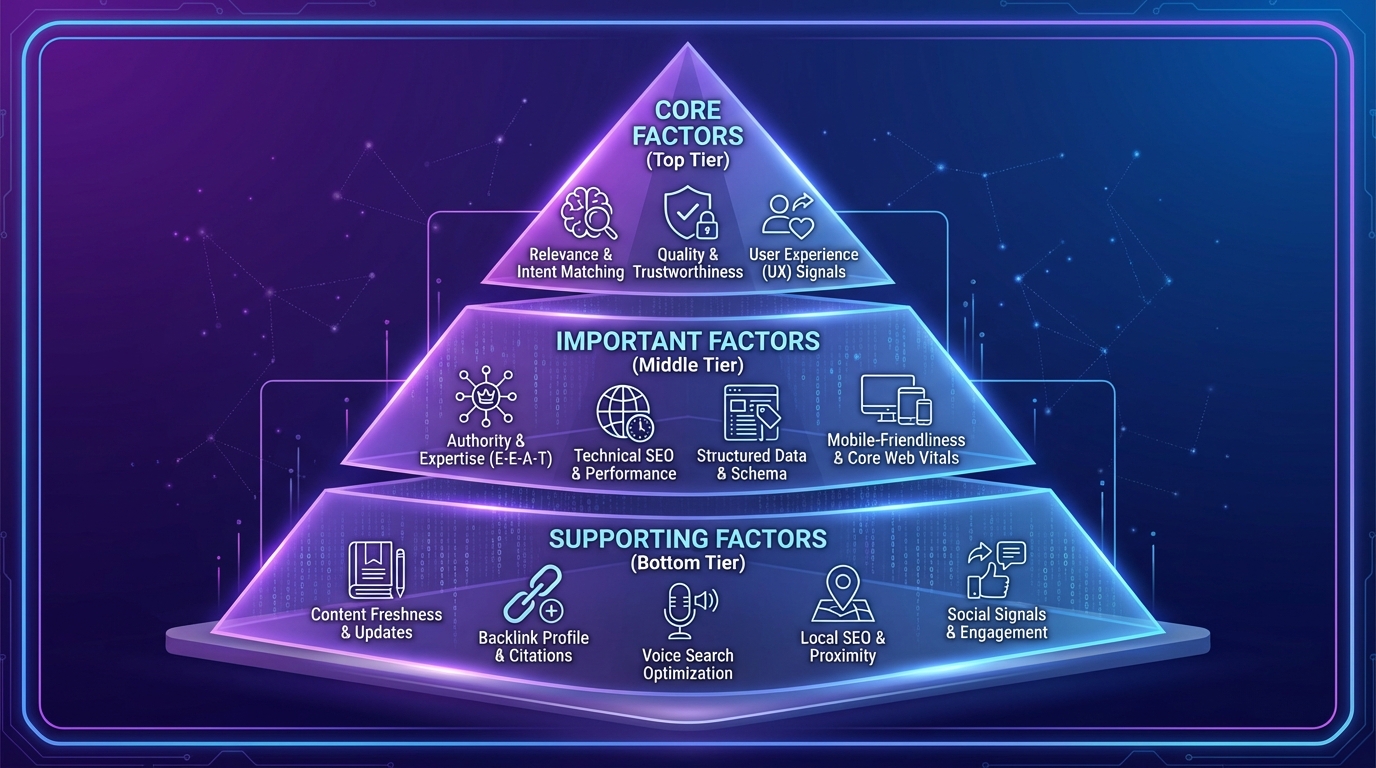
AI Search Engine Ranking Factors: What Actually Matters in 2026
Discover the proven ranking factors that determine visibility across ChatGPT, Perplexity, Google SGE, and Claude in 2026. Data-backed insights from recent studies.
AI SEO Content: How to Rank with Generated Articles in 2026
Learn how AI-generated content can rank on Google in 2026. Complete guide with Google's official guidelines, E-E-A-T requirements, case studies, and optimization strategies.