GEO for SaaS: How to Optimize Content for AI Search Engines
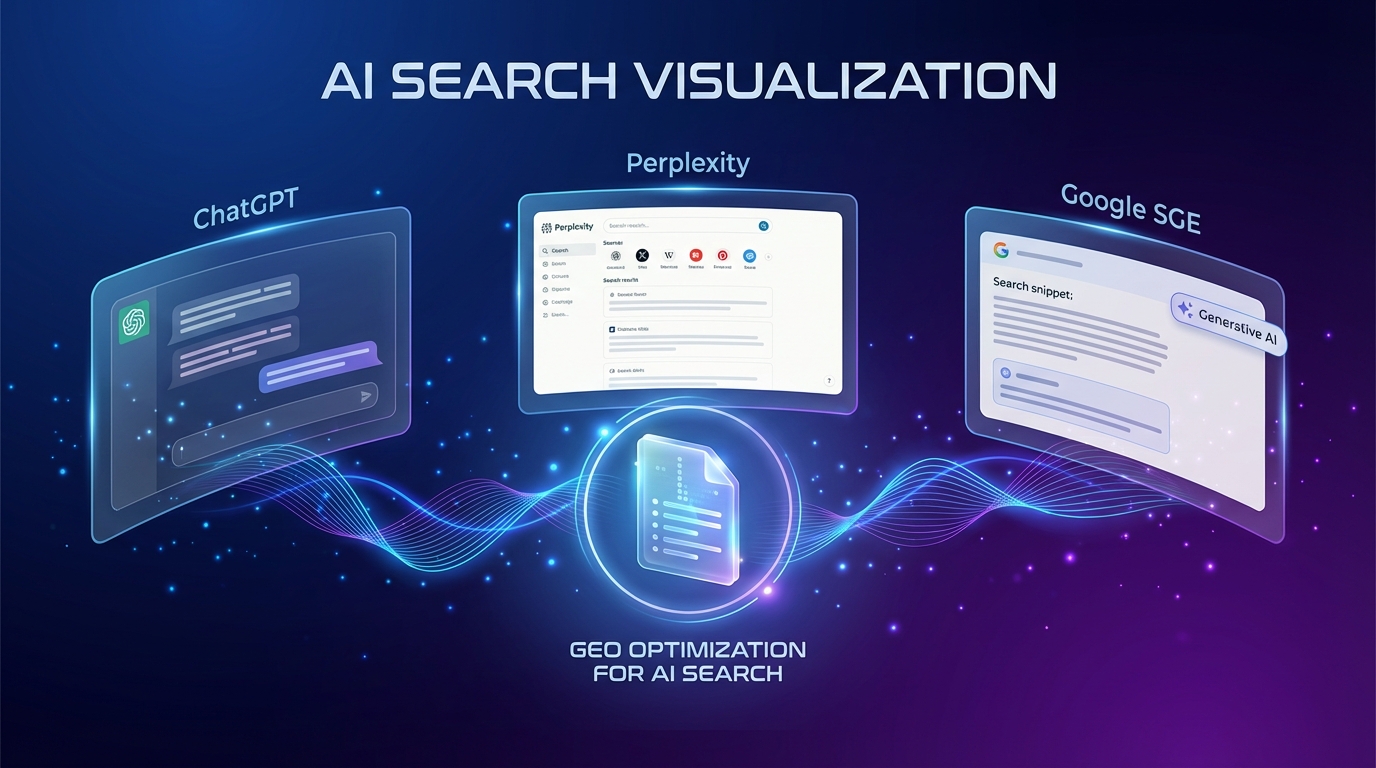
Learn how B2B SaaS companies can leverage Generative Engine Optimization (GEO) to dominate AI search engines like ChatGPT, Perplexity, Claude, and Google SGE in 2026.
Jump to section
The landscape of B2B SaaS marketing is shifting dramatically. Your potential customers are no longer just typing queries into Google—they’re asking ChatGPT, consulting Perplexity, and trusting AI-generated answers. By 2026, 89% of B2B buyers use generative AI tools during purchasing decisions, and over 40% start their buying journey in AI chatbots rather than traditional search engines.
If your SaaS content isn’t optimized for AI search engines, you’re invisible to nearly half of your potential customers. This is where Generative Engine Optimization (GEO) becomes critical.
What is Generative Engine Optimization (GEO)?
Generative Engine Optimization (GEO) is the practice of adapting digital content and online presence management to improve visibility in results produced by generative artificial intelligence (GenAI). Unlike traditional search engine optimization (SEO), which focuses on improving rankings in conventional search engines like Google or Bing, GEO specifically targets generative engines—AI-driven systems that produce direct, summarized answers rather than lists of external links.
Think of it this way: with traditional SEO, you fight to rank #1 on Google’s first page. With GEO, you optimize to become the source that AI engines quote, cite, and recommend in their generated responses. For a detailed breakdown of GEO vs SEO differences, see our comparison guide.
Why GEO Matters for B2B SaaS in 2026
The numbers tell a compelling story:
- ChatGPT dominates with over 800 million weekly active users, holding approximately 81% of the AI chatbot market share
- Perplexity AI has grown to 22 million monthly active users, with 189 million global visitors and 66% year-over-year growth
- AI search is projected to reach 28% of total global search traffic by 2027
- Gen Z and Millennials (your target buyers) lead adoption, with over 70% using AI search tools
- OS-level AI search will ship on 89% of new devices by 2026
For B2B SaaS companies, this shift is existential. Your buyers aren’t just researching differently—they’re trusting AI recommendations more than traditional search results. If your product isn’t cited by ChatGPT or Perplexity when prospects ask about solutions in your category, you don’t exist in their consideration set.
How AI Search Engines Choose Sources to Cite
Understanding how each major AI platform selects and cites sources is critical for effective GEO strategy.
ChatGPT: The Middle Ground
ChatGPT shows moderate bias toward bigger, more established sources and is considered middle ground. When users ask ChatGPT a question, the model responds with a conversational script—your content should be designed to serve as that script. ChatGPT processes over 1 billion queries daily, making it the highest-volume platform to optimize for.
ChatGPT provides reliable citations when browsing mode fetches live results, but provides no citations when the model answers from pretraining. For specific tactics on how to optimize content for ChatGPT, see our dedicated guide. This means your content must be:
- Conversational and quotable
- Clear and authoritative
- Structured for easy extraction
Perplexity: The Democratic Citator
Perplexity operates as an AI-driven citation engine that provides sources for every claim. It has a democratic approach—citing whoever has the best answer, giving smaller sites and emerging voices the best shot. With 780 million queries processed in May 2025 alone, Perplexity is the platform where nimble SaaS startups can compete with established brands.
To rank on Perplexity, you must be the most quotable source, with content that contains claims that are easy to isolate and attribute. Learn more about Perplexity SEO strategies to get your content cited.
Claude: The Authority Seeker
Claude has a higher bar for authority and is more conservative about claims, requiring established credibility. Claude’s citation experience depends entirely on how a developer chooses to show the footnotes in their app. To appear in Claude responses, focus on:
- Demonstrable expertise and credentials
- Conservative, well-supported claims
- Academic and research-backed content
Google SGE: The Integrated Incumbent
Google’s Search Generative Experience (SGE) is the authoritative, integrated answer box on the world’s largest search engine. SGE’s dependence on Google’s index introduces ecosystem biases, favoring well-ranked, well-linked domains. This means traditional SEO efforts actually support your GEO strategy on Google’s platform.
| Platform | Monthly Users | Citation Style | Best Strategy |
|---|---|---|---|
| ChatGPT | 800M+ weekly | Conversational, moderate authority bias | Quotable, script-like content |
| Perplexity | 22M monthly | Democratic, source for every claim | Most precise, quotable answer |
| Claude | Growing | Conservative, high authority bar | Expert credentials, research-backed |
| Google SGE | 1.5B monthly | Favors existing SEO authority | Strong traditional SEO + GEO |
GEO vs. Traditional SEO: Key Differences
Understanding the fundamental differences between GEO and SEO is essential for allocating your content strategy resources effectively.
| Aspect | Traditional SEO | Generative Engine Optimization (GEO) |
|---|---|---|
| Primary Goal | Rank #1 on SERPs | Be cited in AI-generated answers |
| Success Metric | Keyword rankings, organic traffic | Citation rate, brand mentions in AI responses |
| Content Focus | Keyword optimization, backlinks | Answer quality, entity relationships, quotability |
| Format Priority | Long-form blog posts, landing pages | Structured content with clear definitions, statistics, FAQs |
| Technical Focus | Meta tags, site speed, mobile-first | Schema markup, semantic HTML, structured data |
| Authority Signals | Backlinks, domain authority | E-E-A-T (Experience, Expertise, Authoritativeness, Trust), citations |
| Update Frequency | Moderate | High (freshness signals critical) |
| User Intent | Match search queries | Provide AI-extractable answers |
8 Essential GEO Strategies for B2B SaaS
Based on research from Princeton, Stanford, and leading AI search optimization practitioners, here are the proven tactics that boost AI visibility by up to 40%.
1. Lead with Clear Definitions and Structured Answers
What to do: Put the definition, who it’s for, and the short answer in the first few sentences, followed by one small table, then elaboration—don’t bury the lede.
AI models scan for clear, extractable answers in the opening paragraphs. If your content requires reading 500 words before understanding what you’re explaining, AI engines will cite a competitor instead.
Example structure:
[Product/concept name] is a [category] that [core benefit] for [target audience].Unlike [alternative approach], [your solution] [key differentiator].
Key features include:- Feature 1 (with measurable benefit)- Feature 2 (with measurable benefit)- Feature 3 (with measurable benefit)
[Then elaborate with details, use cases, and examples]
2. Implement Entity-Based Optimization
Generative engine optimization trends favor content that functions as knowledge, not loose keywords. Modern AI maps entities, relationships, and context to decide which sources appear in answers.
How to implement:
- Create dedicated pages defining your product category as an entity
- Build comprehensive glossaries explaining industry terminology
- Link related concepts within your content ecosystem
- Use consistent terminology across all content
- Structure content around “what is X,” “how X works,” “X vs Y” patterns
3. Build Comprehensive Topic Clusters
Successful GEO strategies focus on creating interconnected content ecosystems that establish comprehensive topical authority. AI search engines understand content relationships and reward comprehensive coverage of specific topics. For practical techniques on how to build topical authority fast, check our step-by-step guide.
Topic cluster structure:
- Pillar page: Comprehensive guide on the main topic (3,000-5,000 words)
- Cluster content: 8-15 supporting articles exploring specific subtopics (1,500-2,500 words each)
- Internal linking: Strategic links connecting cluster content back to pillar and between related articles
AI search engines reward depth and authority over content volume. Publishing 50 superficial articles about different software categories generates less authority than creating 10 comprehensive guides that definitively address complex business challenges.
4. Maximize E-E-A-T Signals
In 2026, E-E-A-T (Experience, Expertise, Authoritativeness, Trustworthiness) is your strategic cornerstone. Google’s emphasis on E-E-A-T has migrated to AI search engines, which prioritize trustworthy, expert sources.
How to demonstrate E-E-A-T:
- Experience: Include first-hand experiences, case studies, and real implementation examples
- Expertise: Display author credentials, roles, and LinkedIn profiles
- Authoritativeness: Cite original research, industry reports, and academic papers
- Trustworthiness: Show “Last Updated” dates, link to sources, include privacy policies and security certifications
Show provenance with author names, roles, updated dates, and a clear link to your Organization page. When you reference standards or data, link to original sources—favor primary documentation.
5. Optimize for Citation with Statistics and Data
Research from Princeton demonstrates that GEO techniques can boost visibility by up to 40% in AI responses through strategies like statistics inclusion and structured formatting.
Understanding the key AI search ranking factors helps you prioritize your optimization efforts. AI models prioritize content that includes:
- Quantitative data: Specific numbers, percentages, and metrics
- Year-specific statistics: Always use current year data (2026)
- Source attribution: Link to original research and reports
- Comparative data: Show before/after, competitors, or industry benchmarks
When AI engines need to answer “how many” or “what percentage,” content with clear statistics gets cited.
6. Implement Advanced Schema Markup
Essential technical elements include schema markup implementation that makes your product information machine-readable by AI engines.
Critical schemas for SaaS:
{ "@context": "https://schema.org", "@type": "SoftwareApplication", "name": "Your SaaS Product", "applicationCategory": "BusinessApplication", "operatingSystem": "Web-based", "offers": { "@type": "Offer", "price": "49.00", "priceCurrency": "USD" }, "aggregateRating": { "@type": "AggregateRating", "ratingValue": "4.8", "ratingCount": "250" }}Additional schemas to implement:
- Organization schema: Company information, contact details, social profiles
- FAQ schema: Questions and answers about your product
- Review schema: Customer testimonials and ratings
- HowTo schema: Implementation guides and tutorials
- Article schema: Blog posts and thought leadership content
7. Prioritize Freshness Signals
Content that displays “Last Updated” timestamps, includes current year statistics, and references recent developments gets prioritized. Updating 10-15% of your page content regularly sends powerful freshness signals.
Freshness optimization checklist:
- Display prominent “Last Updated” dates on every article
- Update statistics to current year (2026) quarterly
- Add new sections covering recent industry developments
- Refresh examples with current tools and technologies
- Update screenshots and visual assets
- Review and refresh internal links to latest content
AI models check temporal signals to determine content relevance. An article from 2023 without updates will lose to a regularly-maintained competitor piece.
8. Create Multi-Platform Content Strategies
Google is still king with 417 billion searches per month. ChatGPT alone processes 72 billion messages monthly. Users under 44 use, on average, five platforms to search.
Your GEO strategy must target multiple AI engines simultaneously:
- For ChatGPT: Conversational, quotable content structured as answers
- For Perplexity: Precise, citeable claims with clear attribution
- For Claude: Research-backed, conservative claims with expert credentials
- For Google SGE: Traditional SEO foundations + GEO optimization
- For specialized AI: Industry-specific content with technical depth
Implementing GEO: A Practical Framework for SaaS
Here’s a step-by-step framework for implementing GEO optimization in your B2B SaaS content strategy.
Phase 1: Audit and Benchmark (Week 1-2)
- Audit current content: Identify your highest-value pages (product pages, category pages, core guides)
- Test AI citations: Query major AI engines with your target keywords and analyze which competitors get cited
- Identify gaps: Document what information AI engines provide that you don’t currently address
- Set baseline metrics: Track current brand mentions in AI responses
Phase 2: Content Structure Optimization (Week 3-6)
- Restructure core pages: Lead with clear definitions, add structured data, include statistics
- Add FAQ sections: Create comprehensive Q&A sections with schema markup
- Implement schema markup: Deploy SoftwareApplication, Organization, FAQ, and Review schemas
- Optimize formatting: Use headers, bullet points, tables, and clear visual hierarchy
Phase 3: Authority Building (Week 7-12)
- Create topic clusters: Build pillar pages with 8-15 supporting articles
- Add E-E-A-T signals: Include author bios, update timestamps, cite sources
- Gather and display reviews: Implement review schema with authentic customer testimonials
- Build authoritative resources: Create industry glossaries, comparison guides, and research reports
Phase 4: Monitor and Iterate (Ongoing)
- Track AI citations: Use tools like Profound, Goodie AI, or manual queries to monitor brand mentions
- Analyze competitor citations: Study which competitors get cited and why
- Update content regularly: Refresh statistics, examples, and sections quarterly
- Expand topic coverage: Fill content gaps identified through AI query analysis
Automate Your GEO Content Creation
Suparank's AI-powered content engine automatically optimizes for AI search engines, implementing GEO best practices including schema markup, structured formatting, and citation-ready content. Stop manually optimizing—let AI create GEO-optimized content at scale.
Common GEO Mistakes SaaS Companies Make
Mistake 1: Treating GEO as an SEO Replacement
GEO and SEO are complementary, not competitive. Companies that abandon traditional SEO for GEO lose Google’s organic traffic while failing to dominate AI search. The winning strategy integrates both.
Mistake 2: Publishing Shallow Content at Volume
AI search engines reward depth and authority over content volume. Publishing 50 superficial articles generates less authority than creating 10 comprehensive, definitive guides. Focus on quality and topical authority.
Mistake 3: Ignoring Technical Infrastructure
Site performance (Core Web Vitals, page speed, mobile optimization), security signals (HTTPS, security headers, privacy policy), and crawl accessibility remain critical. AI engines won’t cite slow, insecure, or inaccessible sites.
Mistake 4: Optimizing for Only One Platform
Users leverage multiple AI platforms. Optimizing exclusively for ChatGPT while ignoring Perplexity, Claude, and Google SGE limits your potential reach by 40-60%.
Mistake 5: Neglecting Freshness Signals
AI models prioritize recent, updated content. Static content from 2023 will consistently lose to regularly-maintained competitor content. Plan for quarterly content updates.
Measuring GEO Success: Key Metrics
Unlike traditional SEO with established metrics (rankings, traffic, conversions), GEO requires new measurement frameworks.
Primary GEO Metrics
- Citation Rate: Percentage of target queries where your brand appears in AI-generated responses
- Source Attribution: How often AI engines cite your specific content URLs
- Position in Response: Whether you’re cited first, middle, or last in AI answers
- Share of Voice: Your brand mentions vs. competitors in AI responses
- AI Referral Traffic: Direct traffic from AI engines (when available)
Tools for GEO Tracking
As GEO continues to grow and more people use AI search platforms to find answers, specialized tracking tools are emerging:
- Profound: AI search performance tracking across multiple platforms
- Goodie AI: Citation monitoring and competitor analysis
- Superlines: GEO optimization recommendations and tracking
- Bluefish AI: Multi-platform AI search visibility tracking
- Manual Queries: Regular manual testing of target queries across AI engines
Secondary Metrics
- Brand search volume: Increases as AI citations drive awareness
- Direct traffic: Users finding you after AI recommendations
- Content engagement: Time on page, scroll depth for GEO-optimized content
- Conversion rate: Quality of traffic from AI-referred visitors
The Future of GEO for SaaS
The GEO landscape is evolving rapidly. Here’s what’s coming in 2026 and beyond:
Trend 1: OS-Level AI Search Integration
OS-level AI search will ship on 89% of new devices by 2026. Apple Intelligence, Windows Copilot, and Android AI are embedding AI search directly into operating systems. This makes AI search the default discovery mechanism, not an alternative channel.
Trend 2: Vertical AI Search Engines
Industry-specific AI search engines are emerging for legal, healthcare, finance, and software development. B2B SaaS companies should monitor vertical AI platforms relevant to their industry and optimize accordingly.
Trend 3: Citation Commerce
AI platforms are testing direct purchasing within AI-generated responses. When ChatGPT recommends a SaaS tool, users may be able to start trials without leaving the chat interface. Citation becomes conversion.
Trend 4: Multi-Modal GEO
AI search is expanding beyond text to include images, videos, and audio. Video content optimized for AI extraction (clear narration, on-screen text, structured chapters) will gain citation advantages.
Trend 5: Personalized AI Citations
AI engines are moving toward personalized responses based on user history, preferences, and context. This means GEO strategies must address multiple buyer personas and use cases comprehensively.
Conclusion: GEO Is No Longer Optional for SaaS
The data is clear: AI search engines are fundamentally reshaping how B2B buyers discover, evaluate, and purchase SaaS solutions. With ChatGPT processing over 1 billion daily queries, Perplexity growing 66% year-over-year, and Google’s AI Overview reaching 1.5 billion users, traditional SEO alone is insufficient.
B2B SaaS companies that implement comprehensive GEO strategies now are seeing 3x higher citation rates in AI responses. These early movers are establishing topical authority that will compound over time, making it increasingly difficult for late adopters to compete.
The question isn’t whether to invest in GEO—it’s whether you’ll lead or follow in the AI search era.
Get GEO-Optimized Content Automatically
Suparank generates AI-search-optimized content that implements every GEO best practice automatically: structured data, entity optimization, E-E-A-T signals, schema markup, and citation-ready formatting. Start dominating AI search results without manual optimization.
Frequently Asked Questions
What is GEO (Generative Engine Optimization) for SaaS?
How does GEO differ from traditional SEO?
Which AI search engines should B2B SaaS companies prioritize?
What content changes improve GEO performance for SaaS?
Tags
More articles
Best AI Content Tools for WordPress: Plugins, Integrations & Workflows
Discover the top AI content tools for WordPress in 2026, including plugins, API integrations, and complete workflows to automate content creation and SEO optimization.

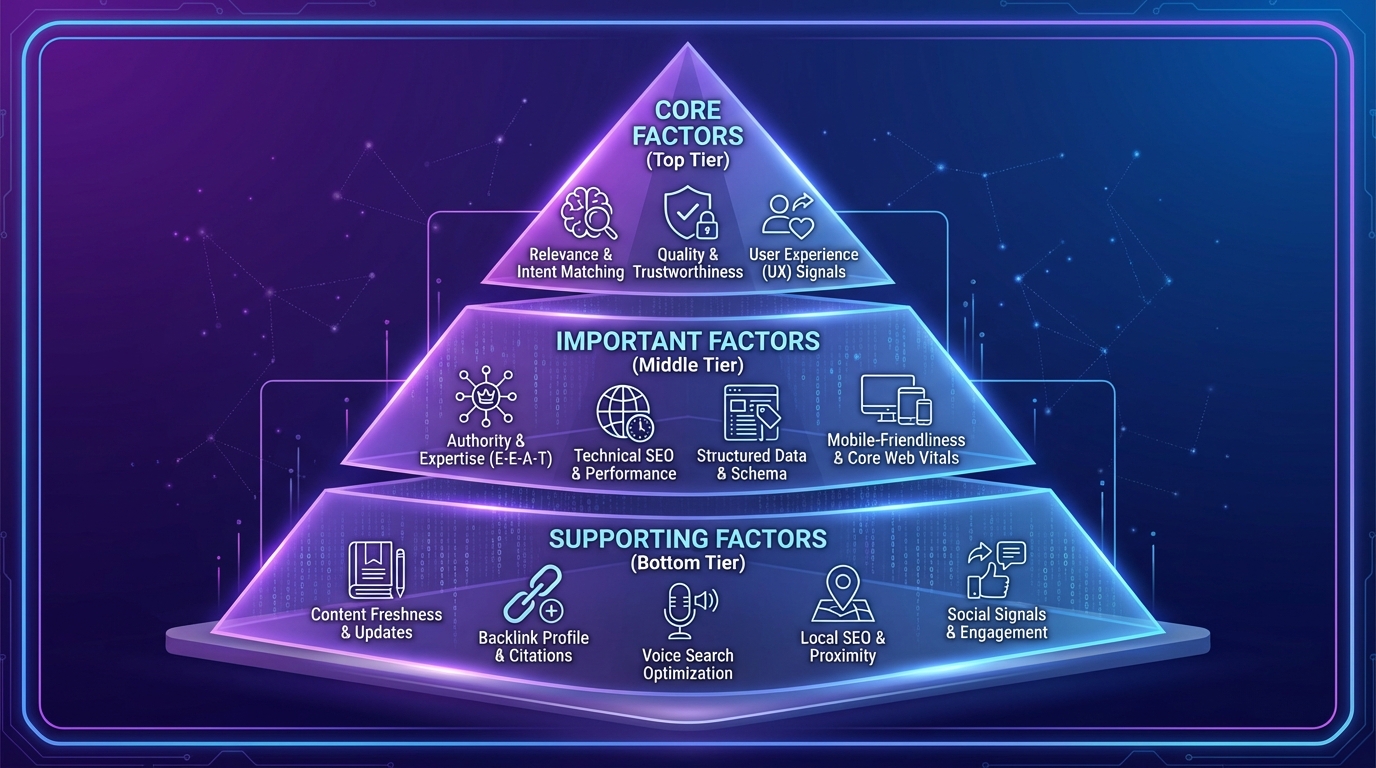
AI Search Engine Ranking Factors: What Actually Matters in 2026
Discover the proven ranking factors that determine visibility across ChatGPT, Perplexity, Google SGE, and Claude in 2026. Data-backed insights from recent studies.
AI SEO Content: How to Rank with Generated Articles in 2026
Learn how AI-generated content can rank on Google in 2026. Complete guide with Google's official guidelines, E-E-A-T requirements, case studies, and optimization strategies.