GEO vs SEO: Key Differences Every Marketer Must Know in 2026
Discover the critical differences between GEO and SEO, why both matter in 2026, and how to build a hybrid strategy that wins in AI search and traditional Google rankings.
Jump to section
The search landscape is experiencing its biggest transformation since Google’s launch in 1998. As AI-powered search engines like ChatGPT, Perplexity, and Google Gemini reshape how people find information, a new optimization discipline has emerged: Generative Engine Optimization (GEO). For SaaS companies in particular, GEO strategies require specialized approaches that differ from traditional B2C optimization.
But does this mean traditional SEO is dead? Far from it. Understanding the relationship between GEO and SEO—and how to leverage both—will define marketing success in 2026 and beyond.
What is SEO (Search Engine Optimization)?
Search Engine Optimization (SEO) is the practice of optimizing your website and content to rank higher in traditional search engine results pages (SERPs). The goal is straightforward: earn the click.
When someone searches Google for “best project management software,” SEO determines which websites appear in positions 1-10. Success is measured by:
- Search rankings: Position in the SERP list
- Click-through rate: Percentage of searchers who click your result
- Organic traffic: Number of visitors from search engines
- Conversions: Users completing desired actions on your site
How SEO Works
SEO relies on search engines crawling your website, indexing your content, and ranking it based on hundreds of signals:
- Technical SEO: Site speed, mobile-friendliness, crawlability, SSL certificates
- On-page SEO: Title tags, meta descriptions, header structure, keyword optimization
- Content quality: Comprehensive coverage, user value, expertise signals
- Off-page SEO: Backlinks from authoritative sites, brand mentions, social signals
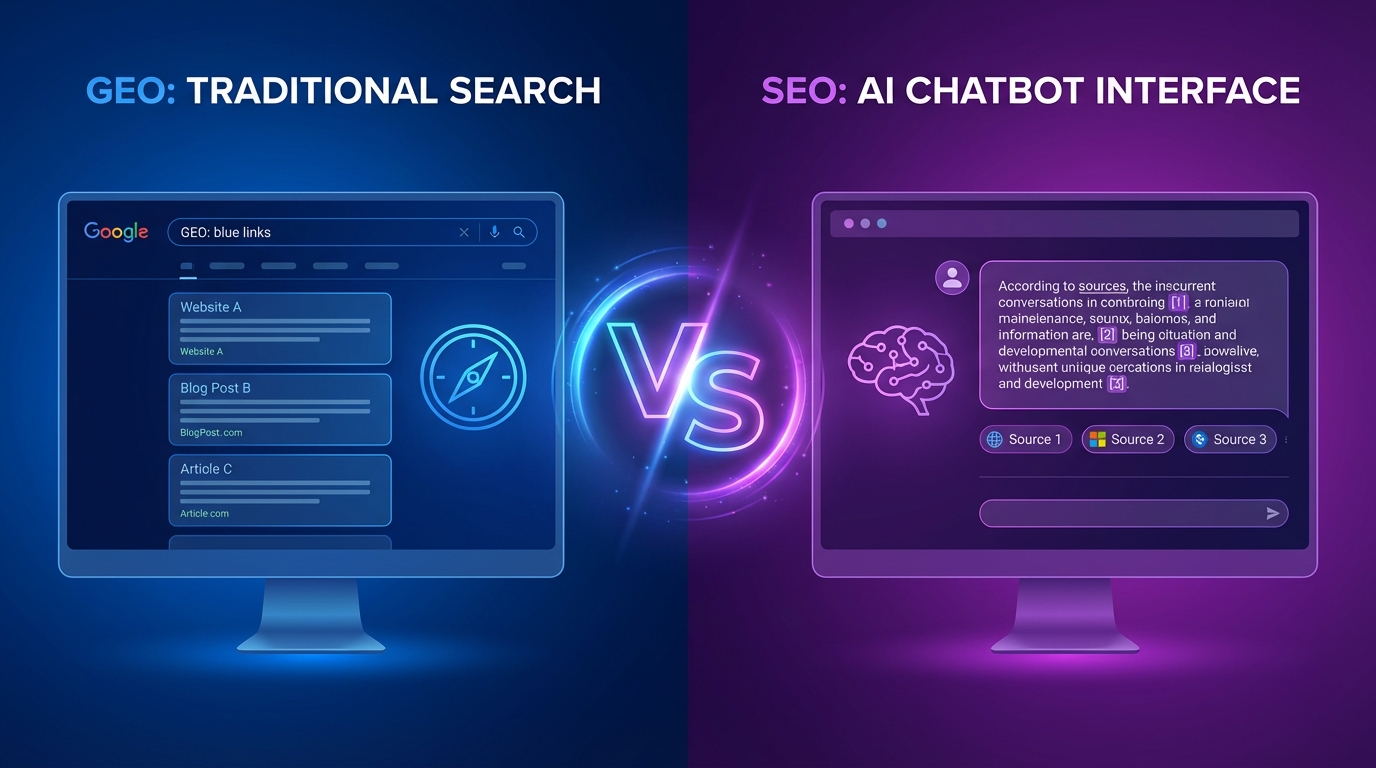
Traditional search engines like Google display multiple result links for users to choose from, allowing them to evaluate options and decide which to visit.
What is GEO (Generative Engine Optimization)?
Generative Engine Optimization (GEO) is the practice of adapting your digital content so that AI-powered search engines can effectively retrieve, understand, and cite your information in generated answers. The goal: earn the citation.
According to research from Princeton University that introduced the concept in November 2023, GEO specifically targets generative engines—AI-driven systems that produce direct, summarized answers rather than lists of external links.
When someone asks ChatGPT or Perplexity “What’s the best project management software?”, these AI systems generate a single comprehensive answer, often citing 3-7 sources. GEO determines whether your brand gets mentioned in that answer.
How GEO Works
GEO focuses on making your content citeable by large language models (LLMs):
- Content clarity: Clear, direct answers to common questions
- Structured data: Schema markup that AI can parse
- Citation-worthy format: Statistics, quotes, expert opinions
- Semantic optimization: Topic coverage over keyword density
- Multi-platform presence: Not just your website—Reddit, forums, reviews
Unlike SEO, which focuses primarily on your website, GEO expands beyond owned properties. AI engines pull from third-party mentions, forums, reviews, and other off-site sources to decide what to cite.
GEO vs SEO: Side-by-Side Comparison
Understanding the key differences helps you allocate resources effectively.
| Factor | SEO (Search Engine Optimization) | GEO (Generative Engine Optimization) |
|---|---|---|
| Primary Goal | Earn the click | Earn the citation |
| Success Metric | Rankings, traffic, CTR | Citations, brand mentions, visibility in AI answers |
| Target Platforms | Google, Bing, traditional search engines | ChatGPT, Perplexity, Gemini, Copilot |
| Result Format | List of 10+ links | Single summarized answer |
| User Intent | Navigational, transactional, informational | Research, recommendations, complex queries |
| Key Ranking Factor | Backlinks, keyword optimization | Entity recognition, citation-worthiness |
| Content Focus | Keywords, meta tags, technical SEO | Conversational content, direct answers, statistics |
| Traffic Type | Click-through to your website | Brand awareness without click |
| Optimization Scope | Your website primarily | Multi-platform (site + Reddit + reviews + forums) |
| Measurement | Google Analytics, Search Console | AI citation tracking, brand mention monitoring |
The Core Philosophy Difference
According to SEO.com, the fundamental distinction is:
“SEO aims to earn the click by optimizing your website to rank highly in search engine results pages (SERPs). GEO aims to earn the citation by optimizing content to be found, understood, and used as a source by generative AI models.”
This shift from clicks to citations represents a fundamental change in how brands build online visibility. Understanding the key AI search ranking factors helps you prioritize optimization efforts across both disciplines.
Key Differences in Tactics and Strategies
While both disciplines share foundational principles—quality, authority, structure, user intent—they interpret and prioritize signals differently.
SEO Tactics That Still Work
Traditional SEO relies on proven strategies:
- Keyword research: Identifying high-volume, low-competition terms
- Technical optimization: Fast loading, mobile-friendly, crawlable sites
- Link building: Earning backlinks from authoritative domains
- Content depth: Comprehensive guides that cover topics thoroughly
- User experience: Clear navigation, engaging design, low bounce rates
Your site needs clean technical performance, smart keyword targeting, and high-quality content that demonstrates topical authority.
GEO Tactics for AI Visibility
GEO requires new approaches tailored to how AI systems consume content:
-
Citation-rich content: Research shows content utilizing citations, direct quotations, and statistics improved visibility by up to 40%
-
Question-based structure: Format content around real questions people ask AI assistants
-
Listicles and comparisons: 25.37% of all AI citations across 2.6 billion analyzed citations come from list-based or comparative content
-
Schema markup: Structured data helps AI systems parse and understand your content
-
Multi-platform presence: Build authority on Reddit, Quora, industry forums—places AI crawls for diverse perspectives
-
Conversational tone: Write as if answering a spoken question
-
Expertise signals: Author bios, credentials, first-hand experience indicators
Platform-Specific Optimization
Different AI platforms have distinct citation preferences:
ChatGPT (GPTBot crawler):
- Wikipedia claims 47.9% of top citations
- Favors established, authoritative sources
- Prefers comprehensive, encyclopedia-style content
- Learn more about how to optimize content specifically for ChatGPT
Perplexity AI (PerplexityBot crawler):
- 46.7% of top citations come from Reddit
- Favors community-generated content
- Shows results within 30 days for fresh content
- See our complete Perplexity SEO guide for citation strategies
Only 11% of domains appear across both platforms, making platform-specific content strategies essential if you’re targeting specific AI engines.
Which Matters More in 2026?
The answer isn’t either/or—it’s both, but with different priorities depending on your goals.
The Current Reality
Despite the GEO hype, traditional SEO still dominates:
- 60% of businesses haven’t seen any impact to their website traffic from AI-assisted search yet
- SEO traffic is still much higher than GEO traffic for most brands
- High-intent navigational searches still happen primarily on Google
According to AI Magazine, GEO looks poised to overtake traditional SEO, but this is a gradual shift, not an overnight replacement.
Traffic Decline Predictions
Gartner forecasts traditional search volume will drop 25% by 2026, though currently AI Mode contributes only about 0.2% of traffic for most sites.
LinkedIn’s Big Ideas 2026 list highlights GEO as a rising trend, noting that as AI-driven tools like chatbots and answer engines become dominant, brands are rethinking discovery strategies.
What This Means For Marketers
The consensus among experts is clear: 2026 is the year of GEO + SEO.
“You need both strategies because together, they maximize reach across traditional search and generative platforms. SEO captures navigational and branded searches that still drive significant traffic, while GEO captures the complex research and recommendation queries where buying decisions form.”
When to Prioritize Each Strategy
Strategic resource allocation depends on your business model and customer journey.
Prioritize SEO When:
✅ You’re in e-commerce or local business (transactional searches still happen on Google) ✅ Your customers use branded or navigational searches ✅ You need measurable ROI from organic traffic ✅ Your conversion funnel depends on website visits ✅ You’re in competitive industries with established search behaviors
Example: A local plumber needs to show up when someone searches “emergency plumber near me”—that’s pure SEO territory.
Prioritize GEO When:
✅ You’re building brand authority in a new market ✅ Your customers ask complex, research-oriented questions ✅ You want to influence early-stage consideration ✅ Your competitors don’t have strong AI visibility yet ✅ You’re in B2B or SaaS where research happens via AI tools
Example: A B2B SaaS company wants to be mentioned when prospects ask ChatGPT “What are the best CRM tools for small businesses?”—that’s GEO’s sweet spot.
The Reality: You Need Both
Most businesses should invest in both, with weighting based on where their customers search.
Research from Boomcycle found that running both simultaneously provides diversified visibility across traditional search and AI platforms, reducing risk from platform-specific algorithm changes.
Building a Hybrid GEO + SEO Strategy
The good news: significant overlap exists between GEO and SEO fundamentals. Both rely on clarity, authority, structure, and user intent.
Step 1: Establish Your SEO Foundation
Don’t abandon SEO basics:
- Technical excellence: Fast, mobile-friendly, secure site
- Content quality: Comprehensive, valuable, expert-level content
- Backlink profile: Build authority through earned links
- Keyword targeting: Cover topics your audience searches
Step 2: Layer GEO Optimization
Enhance your SEO content with GEO tactics:
- Add structured data: Implement schema markup for articles, FAQs, how-tos
- Write conversationally: Answer questions as you would speak them
- Include citations: Add statistics, quotes, expert opinions
- Create comparison content: Side-by-side evaluations perform well in AI
- Build off-site presence: Contribute to Reddit, Quora, industry forums
Step 3: Optimize for AI Crawlers
Ensure AI bots can access your content:
- Allow AI crawlers in your robots.txt (GPTBot, PerplexityBot, etc.)
- Use server-side rendering if your site relies on JavaScript
- Create AI-friendly content: Clear headings, short paragraphs, logical flow
- Add transcripts: For video/audio content, provide text versions
According to Claritydigital, server-side rendering has become crucial for AI visibility, as many AI crawlers struggle with JavaScript-heavy sites.
Step 4: Expand Beyond Your Website
GEO requires a broader content strategy:
- Reddit presence: Perplexity heavily cites Reddit—engage authentically
- YouTube content: 29.5% of Google AI Overviews cite YouTube, making it the top domain overall
- Industry forums: Participate where your audience asks questions
- Review sites: Maintain profiles on G2, Capterra, Trustpilot
- Guest posting: Publish on sites AI engines cite frequently
Step 5: Measure Both Channels
Track different metrics for each:
SEO Metrics:
- Organic traffic (Google Analytics)
- Keyword rankings (Ahrefs, SEMrush)
- Backlinks acquired
- Conversion rate from organic
GEO Metrics:
- Brand mentions in AI answers (manual testing)
- Citation tracking tools (emerging market)
- Direct traffic increases (brand searches)
- Customer feedback on discovery method
Automate Your GEO + SEO Content Strategy
Suparank optimizes your content for both traditional search engines and AI platforms automatically. Generate SEO-optimized blog posts with GEO best practices built in.
The Future: What’s Next for GEO and SEO
Looking beyond 2026, several trends are reshaping the optimization landscape.
1. Topic Targeting Over Keywords
One of the biggest GEO trends for 2026 is focusing on topic targeting over keyword targeting, and shifting focus to brand visibility and mentions.
AI systems understand context and semantics better than keyword matching. Content that covers topics comprehensively will outperform content stuffed with exact-match keywords.
2. Entity Recognition Replaces Backlinks
AI engines interpret signals through entity recognition rather than backlinks or click metrics. Being recognized as an entity (a known brand, person, or concept) matters more than link quantity.
Build entity recognition through:
- Consistent brand mentions across platforms
- Wikipedia presence (if applicable)
- Structured data markup
- Press coverage and third-party validation
3. Video as Citation Source
According to Searchengineland, video content is increasingly becoming source material for AI answers. YouTube’s dominance in AI Overviews (29.5% of citations) makes video content creation essential.
The queries where YouTube videos appear most include tutorials, product demos, reviews, and “how-to” content.
4. Zero-Click Future
As AI provides direct answers, traditional click-through may decline further. Brands will need to find value in brand awareness and consideration rather than immediate website traffic.
This shifts content strategy toward:
- Building brand authority and trust
- Creating memorable, citation-worthy content
- Measuring brand lift and awareness metrics
- Finding value in “assist” conversions, not just “last-click”
5. Platform Diversification Becomes Essential
Relying on a single search platform (Google) becomes riskier. Smart marketers will diversify across:
- Traditional search (Google, Bing)
- AI search (ChatGPT, Perplexity, Gemini)
- Social discovery (TikTok, Instagram, LinkedIn)
- Community platforms (Reddit, Quora, Discord)
Common Mistakes to Avoid
As you implement a hybrid strategy, watch out for these pitfalls:
1. Abandoning SEO Entirely
The Mistake: Shifting 100% of resources to GEO because it’s the “future.”
Why It’s Wrong: SEO still drives the majority of high-intent traffic. GEO complements SEO, it doesn’t replace it.
The Fix: Maintain your SEO foundation while layering GEO tactics on top.
2. Treating GEO as Completely Separate
The Mistake: Creating separate “GEO content” and “SEO content.”
Why It’s Wrong: Both rely on the same fundamentals—quality, authority, structure, and user intent.
The Fix: Optimize every piece of content for both simultaneously. The overlap is significant.
3. Ignoring Platform Differences
The Mistake: Using identical tactics for all AI platforms.
Why It’s Wrong: ChatGPT favors Wikipedia, Perplexity prefers Reddit—platforms have distinct preferences.
The Fix: Research which platforms your audience uses and tailor content accordingly.
4. Focusing Only on Owned Properties
The Mistake: Only optimizing your website for GEO.
Why It’s Wrong: AI engines pull heavily from third-party sources like forums, reviews, and communities.
The Fix: Build presence across platforms where your audience asks questions.
5. Not Allowing AI Crawlers
The Mistake: Blocking GPTBot, PerplexityBot, and other AI crawlers in robots.txt.
Why It’s Wrong: AI can’t cite what it can’t access.
The Fix: Allow AI crawlers while monitoring for content scraping or attribution issues.
Real-World Implementation Timeline
What does a realistic GEO + SEO rollout look like?
Month 1: Audit and Foundation
- Audit current SEO performance (rankings, traffic, technical health)
- Check robots.txt for AI crawler access
- Implement core schema markup (Organization, Article, FAQ)
- Identify top-performing content to enhance with GEO tactics
Month 2-3: Content Enhancement
- Add citations and statistics to existing content
- Rewrite top pages in Q&A format where appropriate
- Create comparison and listicle content
- Optimize for conversational queries
Month 4-6: Multi-Platform Expansion
- Launch Reddit presence (authentic participation, not spam)
- Create YouTube channel with tutorial content
- Contribute to industry forums and Quora
- Build guest posting relationships
Month 7-12: Measurement and Refinement
- Track brand mentions in AI answers
- Monitor organic traffic trends
- Refine based on which tactics drive results
- Scale what works, cut what doesn’t
Most companies see measurable improvements in AI visibility within 3-6 months, with content freshness improvements on platforms like Perplexity showing results within 30 days.
FAQs: Your GEO vs SEO Questions Answered
What is the main difference between GEO and SEO?
SEO focuses on ranking higher in traditional search engine results to earn clicks, while GEO focuses on getting your content cited within AI-generated answers to earn mentions. SEO targets Google’s result pages, while GEO targets AI platforms like ChatGPT, Perplexity, and Google Gemini.
Will GEO replace SEO in 2026?
No, GEO will not replace SEO in 2026. While GEO is growing rapidly, traditional SEO still drives the majority of high-intent traffic. Experts predict a 25% decline in traditional search volume, but SEO remains crucial. The winning strategy is integrating both approaches for maximum visibility.
How do I optimize my content for both GEO and SEO?
Focus on content quality, clear structure, and user intent—fundamentals that matter for both. For SEO, prioritize keywords, backlinks, and technical performance. For GEO, add schema markup, write conversationally, include citations and statistics, and format content as Q&A or listicles that AI can easily parse.
Which AI search engines should I optimize for?
The main AI search engines to optimize for in 2026 are ChatGPT (via GPTBot), Perplexity AI (via PerplexityBot), Google Gemini, Microsoft Copilot, and Claude. Each has unique citation preferences—ChatGPT favors Wikipedia, while Perplexity prefers community content like Reddit.
The Bottom Line: Embrace Both for Maximum Impact
The question isn’t “GEO vs SEO”—it’s “GEO + SEO for complete visibility.”
As Google’s John Mueller stated, labels matter less than reality. Focus on the full picture: understanding your audience behavior and providing value wherever they search.
Your Action Plan
- Maintain your SEO foundation: Don’t abandon what’s working
- Layer GEO tactics: Enhance content with AI-friendly formatting
- Expand beyond your website: Build multi-platform presence
- Measure both channels: Track SEO metrics and GEO citations
- Stay adaptable: The landscape is evolving—test, measure, adjust
The marketers who win in 2026 and beyond won’t choose between GEO and SEO. They’ll master both, creating content that ranks in Google, gets cited by ChatGPT, appears on Perplexity, and drives results across every channel where their audience searches.
The future of search visibility isn’t either/or—it’s comprehensive, multi-platform optimization that meets users wherever they are.
Ready to optimize for both GEO and SEO? Start with Suparank to create content that ranks everywhere your audience searches.
Frequently Asked Questions
What is the main difference between GEO and SEO?
Will GEO replace SEO in 2026?
How do I optimize my content for both GEO and SEO?
Which AI search engines should I optimize for?
Tags
More articles
Best AI Content Tools for WordPress: Plugins, Integrations & Workflows
Discover the top AI content tools for WordPress in 2026, including plugins, API integrations, and complete workflows to automate content creation and SEO optimization.

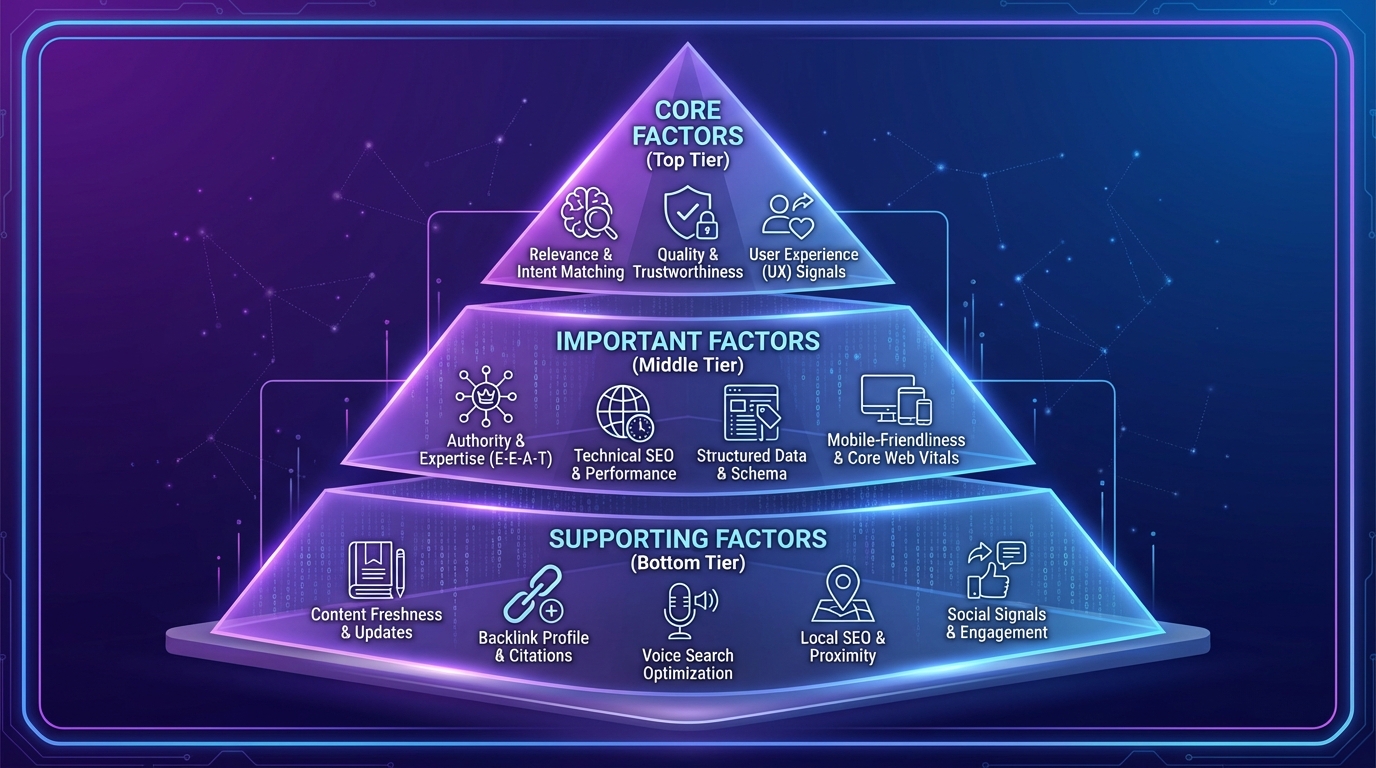
AI Search Engine Ranking Factors: What Actually Matters in 2026
Discover the proven ranking factors that determine visibility across ChatGPT, Perplexity, Google SGE, and Claude in 2026. Data-backed insights from recent studies.
AI SEO Content: How to Rank with Generated Articles in 2026
Learn how AI-generated content can rank on Google in 2026. Complete guide with Google's official guidelines, E-E-A-T requirements, case studies, and optimization strategies.